Confirm landlord, facilities and parking authority
Authority and access are confirmed before the electrical scope is defined.
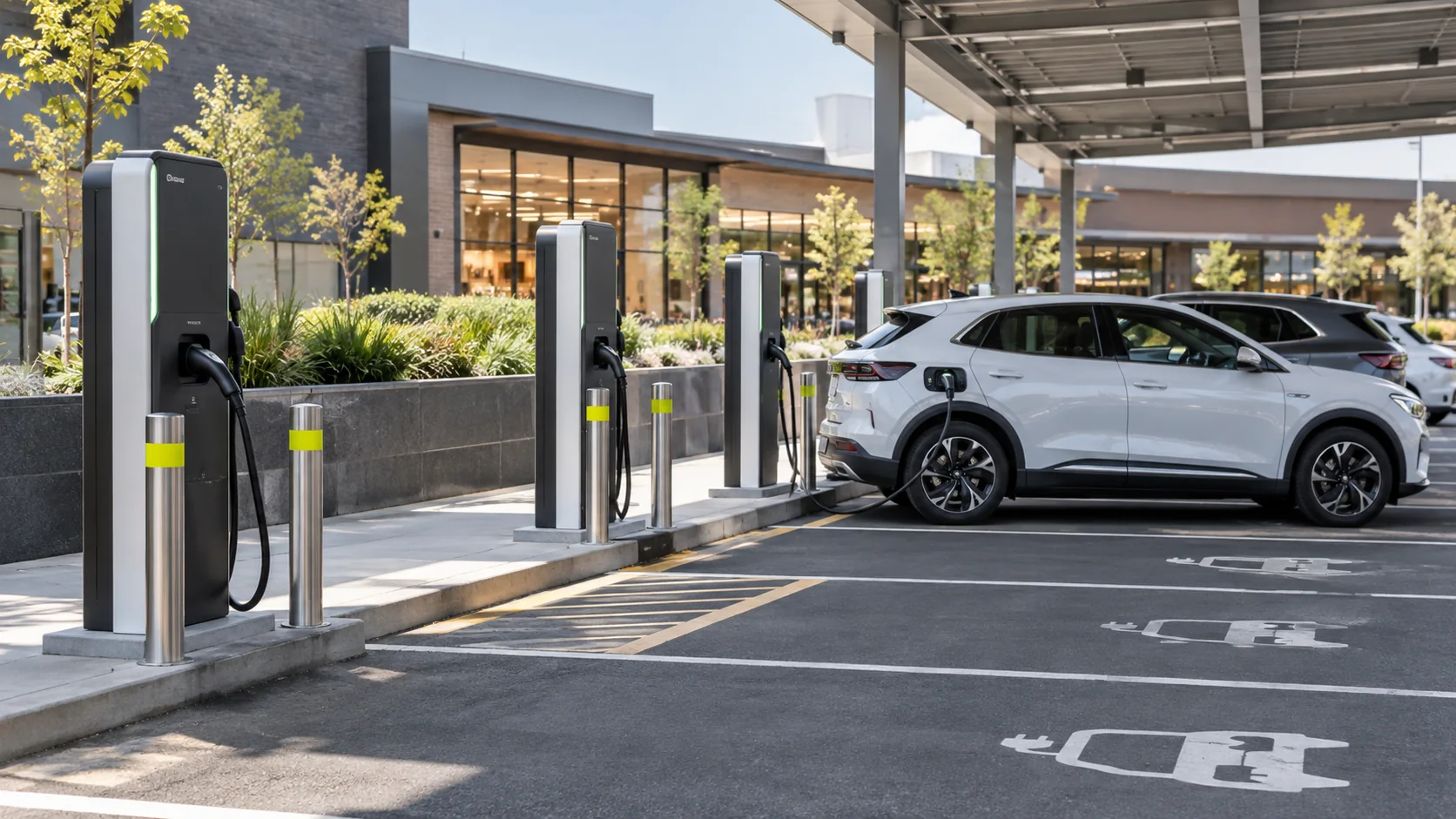
Commercial parking and electrical coordination
EV charging points at a shopping centre affect more than a parking bay. The electrical scope must be coordinated with property authority, available supply, distribution, protection, isolation, cable routes, accessibility, civil work, metering, payment or network systems and ongoing operational responsibility.
Plan from evidence
A shopping-centre rollout may begin with one or more bays, but present equipment and possible expansion should be considered together. Wesslink defines the electrical installation scope while charger hardware supply, civil works, connectivity, payment platforms and vehicle support remain separately confirmed responsibilities.
A charger rating does not prove the property can supply that rate or that the vehicle can accept it. Final scope follows assessment and the manufacturer information for the intended equipment.
Authority and access are confirmed before the electrical scope is defined.
The existing installation is assessed rather than assumed suitable.
Responsibilities and next steps are recorded for the actual property.
Electrical assessment path
Scope boundaries
Charger supply, electrical installation, civil or structural work, connectivity, payment services, utility approvals and vehicle support may involve different parties. Wesslink confirms the electrical scope for the actual site. Equipment compatibility, available capacity, charging time, approval and appointment availability are not assumed.
Useful Wesslink routes
Questions before installation
Not automatically. The charger documentation, vehicle, supply, circuit, protection, earthing, cable route and duty must be assessed. A dedicated charging circuit or other work may be required for the actual installation.
Charging time depends on the vehicle, its onboard charger, the selected charging equipment, available supply, battery state and operating conditions. It should not be promised from connector appearance or charger rating alone.
The assessment considers the intended vehicle and charger documentation, phase and supply arrangement, available capacity, board space and condition, protective devices, isolation, earthing, cable route, environment and parking position.
The property owner and any relevant landlord, body corporate, trustees, HOA, facilities team, utility or other authority must be identified for the actual site. Approval requirements vary by property and scope.
Send the exact address, property and parking type, vehicle and charger model or data sheet, intended use, board or supply information if known, authorised contact, access times and safe closed-panel or route photographs.
Send an assessment brief
Send the exact address, property and parking type, vehicle and charger model or data sheet, intended use, board or supply information if known, authorised contact, access times and safe closed-panel or proposed-route photographs.