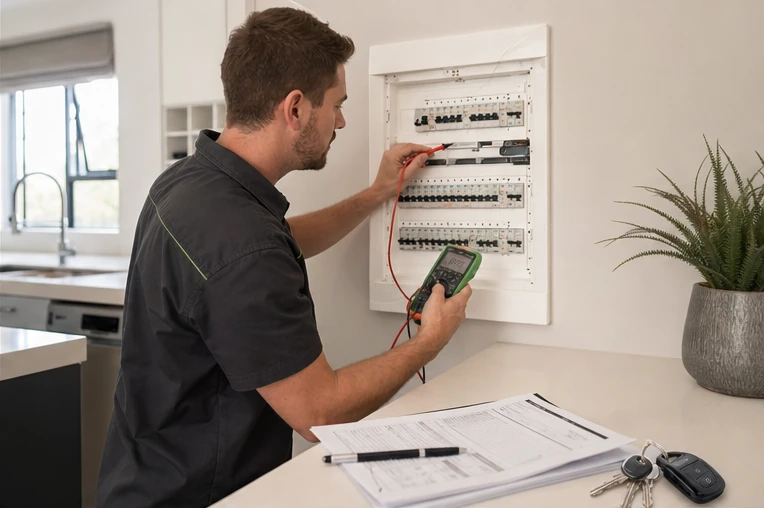
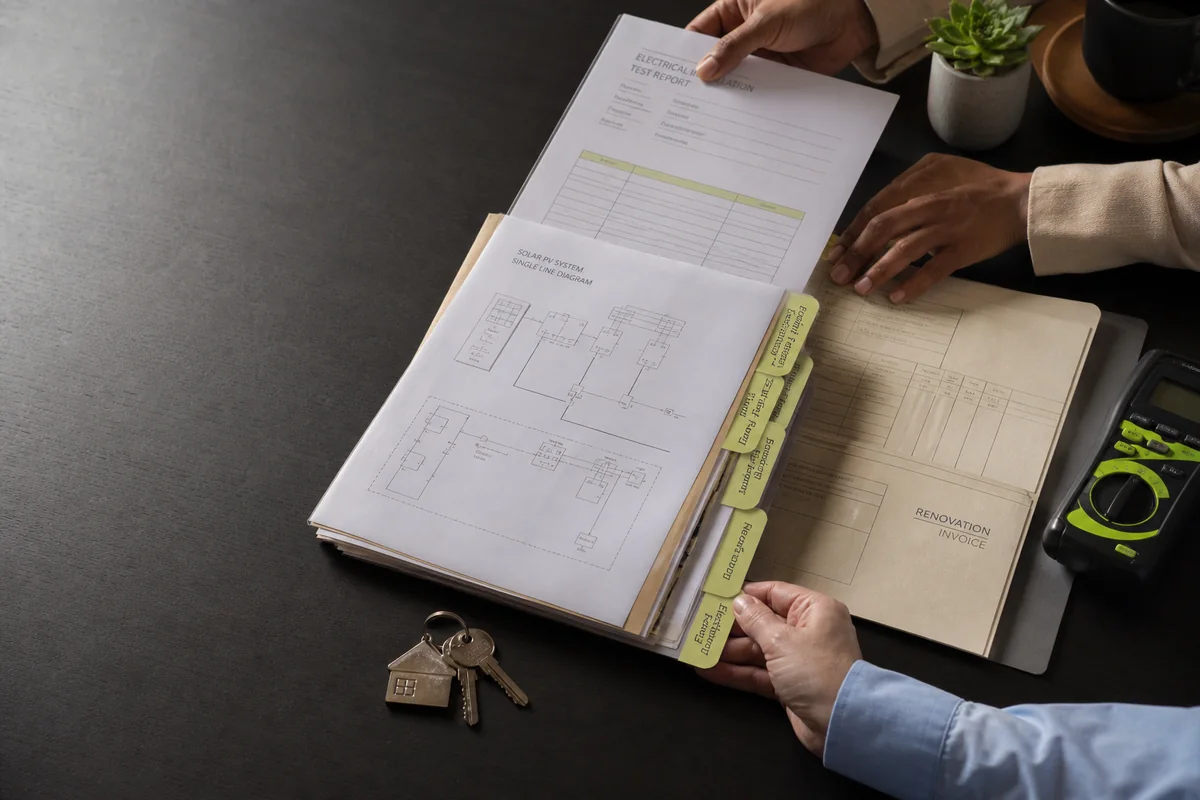
This electrical COC checklist helps sellers and estate agents prepare the records, access and decision-makers needed before inspection and testing begins.
A property transfer often exposes years of disconnected electrical records. The seller may have an old certificate, solar documents, fence records and invoices stored in different places.
Collecting them before inspection helps define the present installation and prevents important additions from being disclosed at the last minute.
01
Electrical COC checklist: build one transfer pack
Include previous certificates, renovation records, solar and inverter documents, fence records and any recent electrical reports. State which outbuildings, cottages and fixed systems form part of the property.
Do not assume an old certificate describes later alterations.
- Previous electrical COCs.
- Plans or records of alterations.
- Solar, inverter and generator documents.
- Electric-fence certification records.
- Transfer deadline and authorised contacts.
02
Confirm scope and decision authority
In sectional-title properties, distinguish the unit from common property. Confirm who may authorise remedial work and who needs the final documents.
The sale agreement and conveyancing instructions should guide the transaction requirements.
- Electrical Installation Regulations — Official Department of Employment and Labour regulations.
- Department of Employment and Labour COC notice — Official compliance guidance for owners, businesses and contractors.
03
Use the inspection to establish the current position
Records help, but inspection and testing address the installation as it exists. If defects are identified, request an explained remedial scope.
Keep the completed certificate and supporting records with the property file for the next owner.
- Electrical COC service — Local Wesslink electrical service and property guidance.
- Contact Wesslink — Send the address, property type and the symptoms or work required.
04
Documents worth collecting before inspection
Collect earlier electrical COCs and test reports, solar or inverter diagrams, electric-fence certificates, generator documentation, renovation records and invoices for material additions. Include estate or body-corporate approvals where they affect the installation.
Do not alter or recreate missing records. A truthful gap is more useful than a document that cannot be verified.
- Earlier electrical COCs and test reports.
- Solar, inverter, battery and generator records.
- Electric-fence system certificates.
- Plans or invoices for additions and renovations.
- Access information for boards, cottages and outbuildings.
05
Work backwards from the transfer deadline
Allow time for inspection, a written defect scope, owner authorisation, materials, corrective work, retesting and delivery of the final documents. A same-day expectation can turn a manageable process into an avoidable crisis.
Estate agents can add value by asking for the property file when the mandate begins rather than waiting for conveyancing pressure.
- Gauteng property-transfer COC guide — The full inspection, defect and certification process.
FAQ
Questions readers also ask
Does an old COC remain useful?
Yes, as part of the history, but later alterations and the specific transfer requirements still need consideration.
Should the estate agent hold the original certificate?
The parties should follow the conveyancing process and retain reliable copies in the property file.
What if solar was added after the old COC?
Disclose the work and provide its available documentation so the present installation can be assessed correctly.