Establish the tenant circuit
Identify the tenant or common load, relevant board and protection, lease or management authority, and where responsibility passes between landlord and tenant.
Landlord, tenant and common reticulation
Assessment and installation support for authorised private shopping-centre submeters, subject to supply boundary, ownership, circuits, platform, access and confirmed scope.
A shopping-centre private submeter sits within a chain of responsibilities. Before installation, the utility revenue-meter boundary, landlord or common infrastructure, tenant circuit, platform administrator and authorised access route must be made explicit.
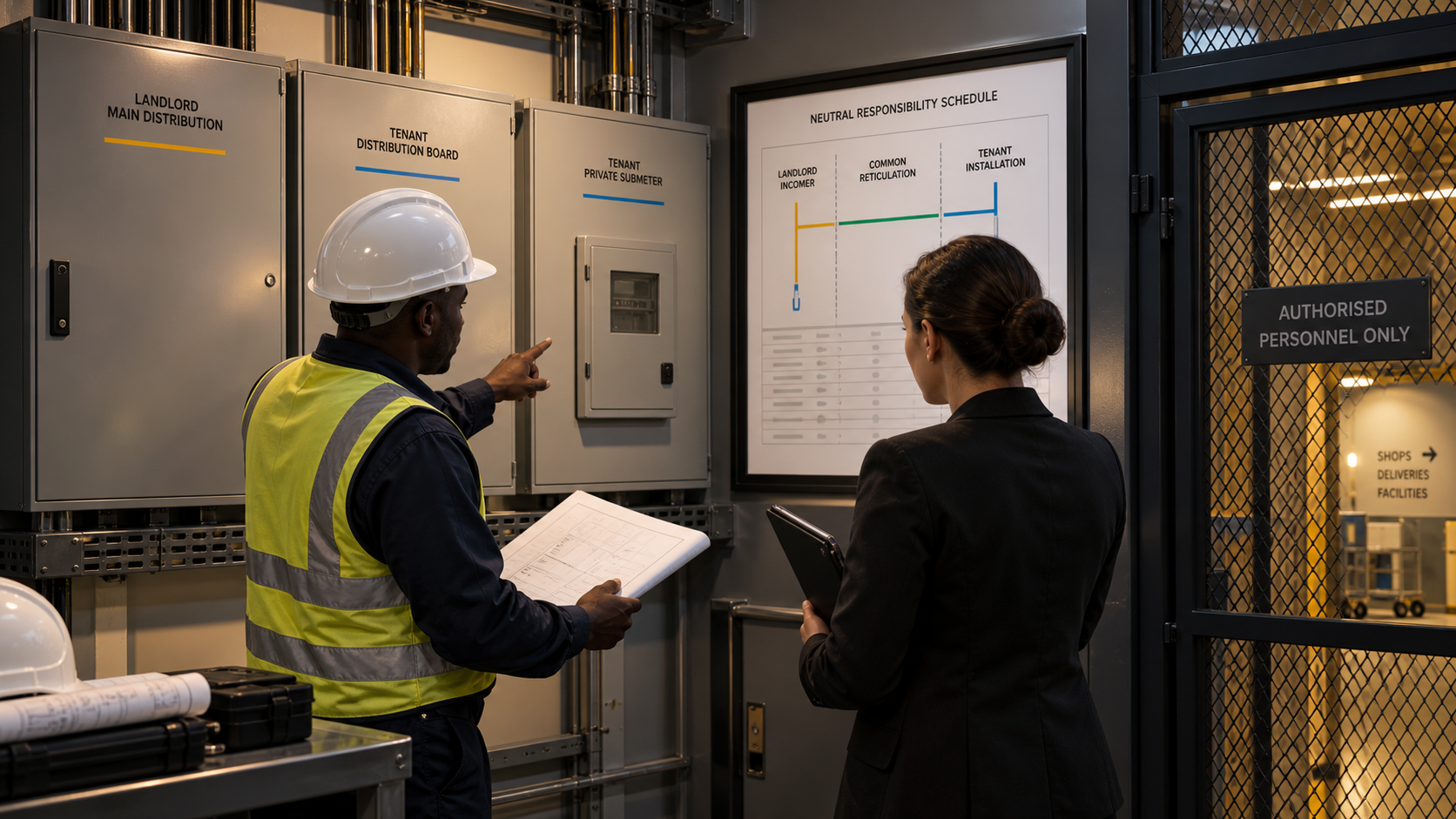
Managed responsibility
Identify the tenant or common load, relevant board and protection, lease or management authority, and where responsibility passes between landlord and tenant.
Record the meter and interface selected, vending or management provider, customer-support route, communications and who administers commercial data after handover.
Plan facilities and security contacts, public or trading-area restrictions, isolation windows, tenant notices, testing and factual handover.
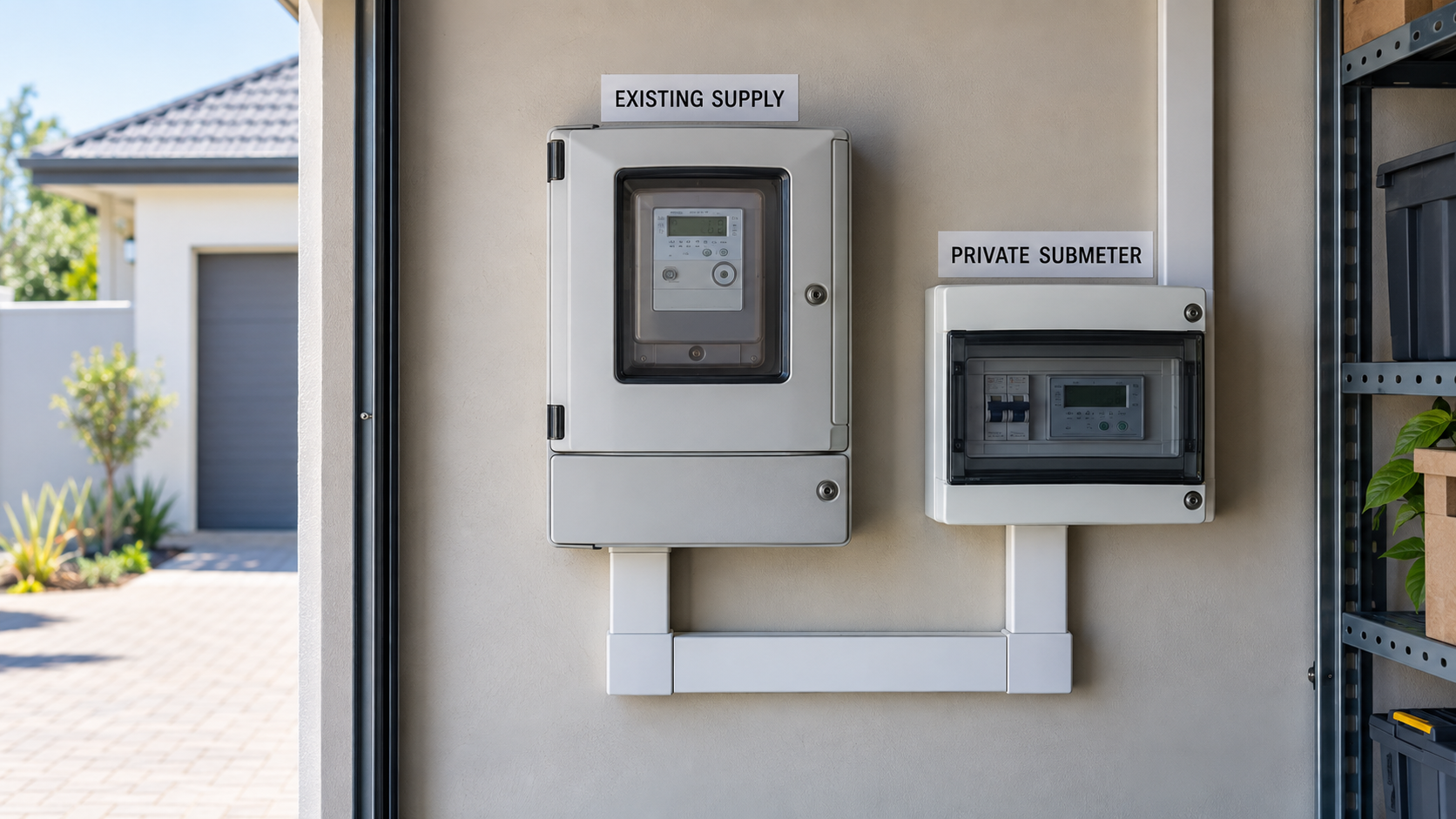
Electrical scope only
If the work affects the utility revenue meter, seals, service cable, point of supply, account configuration or network equipment, it stops and routes to the owner's authorised process.
Commercial boundary
No live work, meter bypass, illegal connection, seal breaking, token manipulation, tamper defeat or DIY installation guidance is provided.
Prepare the assessment
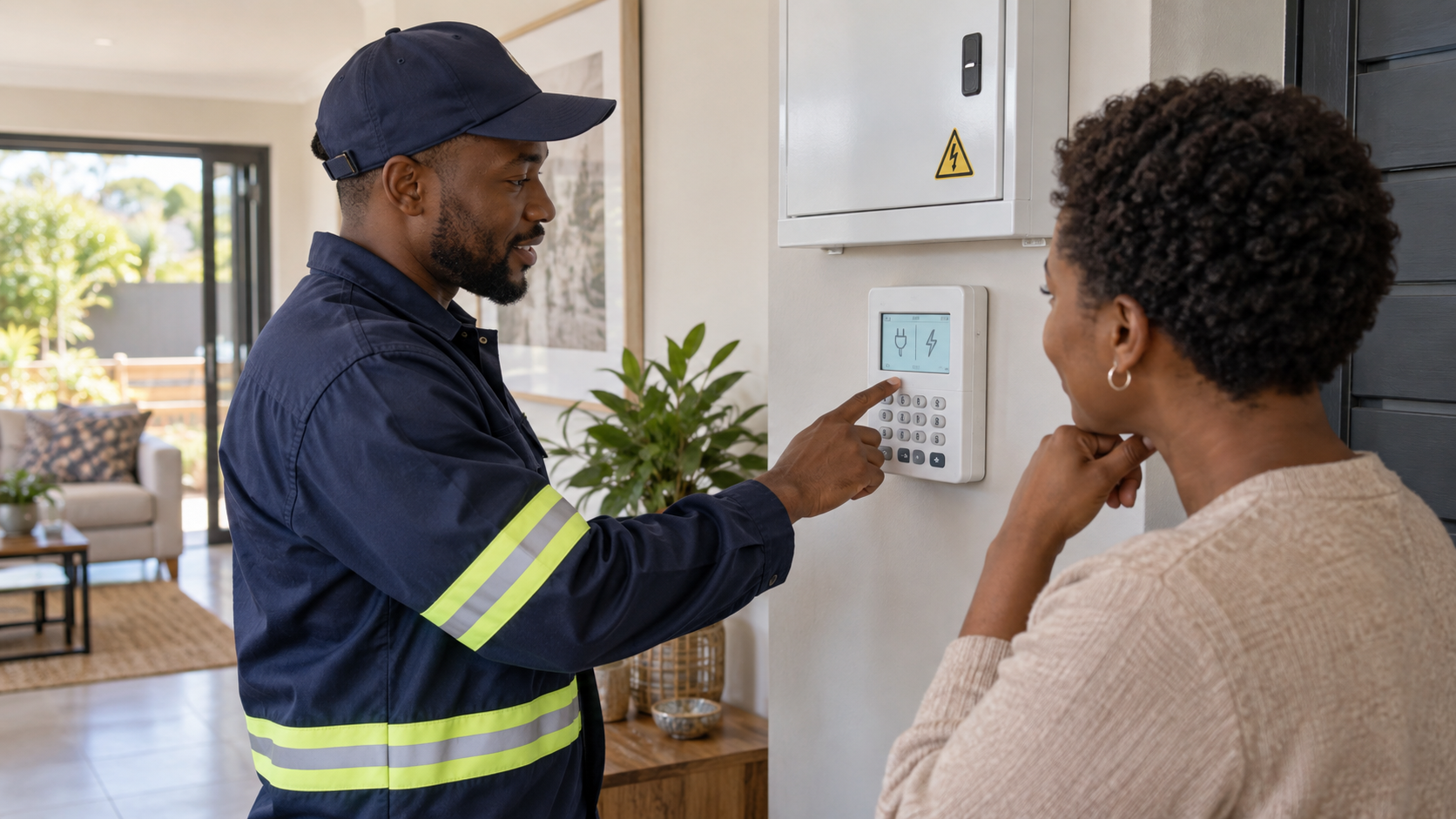
Questions before approval
A private submeter measures a downstream circuit on privately controlled reticulation behind the property's existing utility or municipal revenue meter. The revenue meter, seals, service cable, point of supply, account and network equipment remain with their owner and authorised process.
The instructing party must have authority over the affected private installation and circuit. Landlord, tenant, HOA, body-corporate, managing-agent and owner responsibilities should be confirmed for the actual property.
Identify the supply boundary, every relevant board, the circuit or load to be metered, and the party responsible for each section. A management role does not automatically create authority over a tenant or dwelling installation.
Compatibility cannot be assumed. Verify the meter model, platform provider, token or customer interface, communications, enclosure, environment and electrical arrangement against current provider and product information.
No. Installation does not itself approve resale, tariffs, allocation or recovery terms, or make private billing automatically lawful or compliant. Those matters require the current property authority, agreements, provider terms and applicable rules.
Confirm security and facilities contacts, controlled areas, notices, access permissions, the authorised isolation window and affected occupants or operations before work and testing are scheduled.
Possibly. Board condition, protection, identification, available space, supply and the intended circuit are assessed. Any board work must be defined and approved as part of the electrical scope.
Testing, handover records and COC implications depend on the fixed electrical work actually completed and its legal scope. They cannot be determined from the requested meter alone.
Stop and report it through the owning utility or municipality's authorised process. Do not open, relocate, replace, bypass, reset or break a seal on provider-owned equipment.
Preserved supporting owners
Eskom prepayment FAQs support the private-reticulation distinction. The South African Distribution Metering Code addresses ownership of provider metering and access restrictions. Fixed electrical work remains subject to the Electrical Installation Regulations. Product and commercial terms require current provider and property-authority verification.
Authority and boundary first
Send the supply-boundary, circuit and platform details so electrical scope, access, compatibility checks and handover responsibility can be defined without implying utility authority or billing approval.
Send the supply-boundary, circuit and platform details