Trace the installation
Separate whole-building infrastructure from tenant installations.
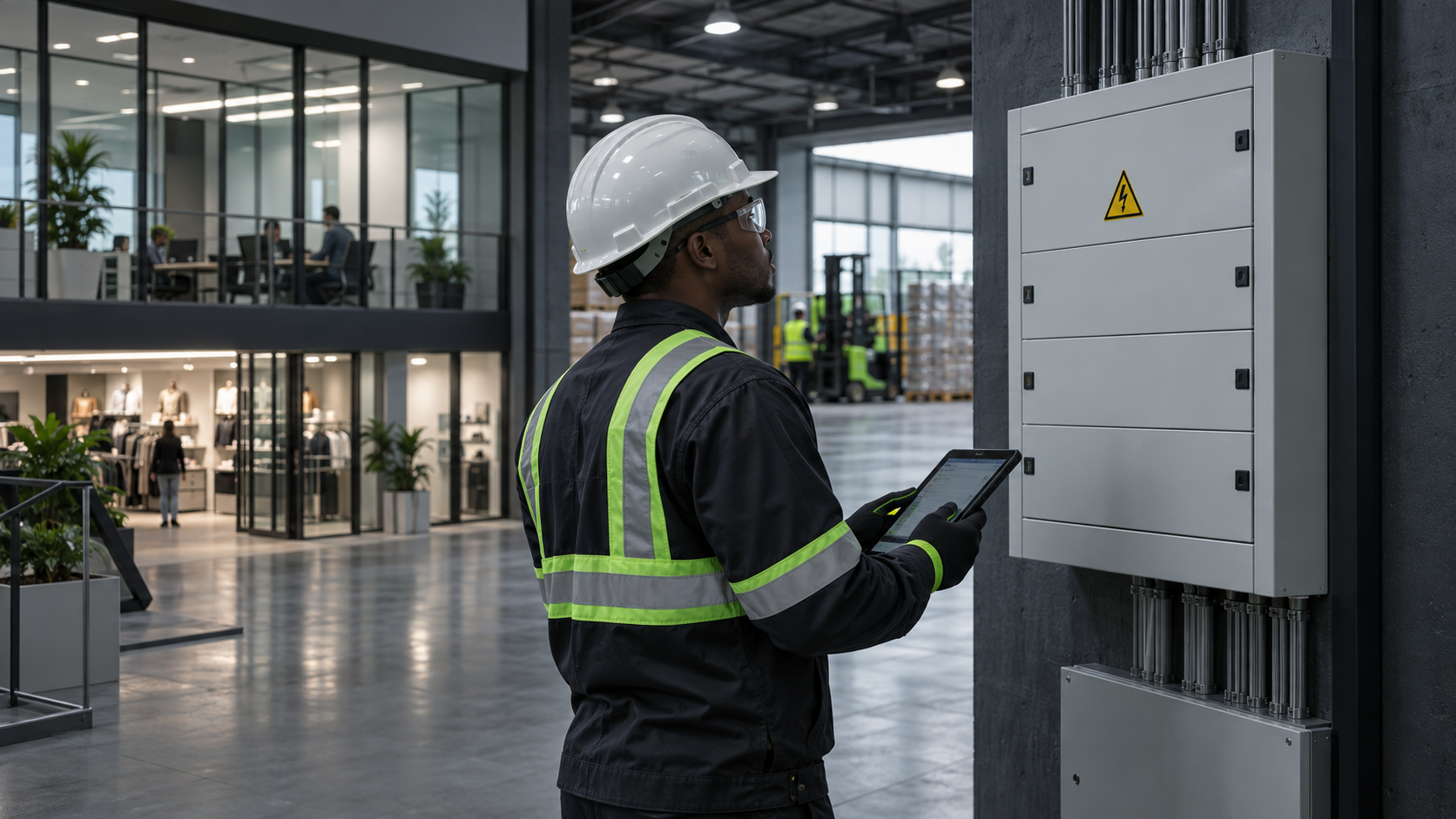
Whole-building, tenant and shared-plant boundaries
Surge-protection assessment for commercial buildings, main and sub-distribution, tenant services and shared plant with clear responsibility. Assessment comes before device quantity or placement.
Property-specific planning
Commercial-building work should distinguish the main supply, sub-distribution, tenant services and shared plant. Facilities reporting and authorised isolation are part of a defensible scope.
Transformer and network switching can create transient conditions, but an event should not be diagnosed remotely. Protection cannot be promised against every voltage disturbance.
Separate whole-building infrastructure from tenant installations.
Map main boards, downstream boards and data or control lines.
Agree access, isolation, reporting and close-out responsibilities.
Surge is not the same as lightning
An SPD limits transient overvoltage and diverts surge energy. A structural lightning-protection system addresses a different hazard. Direct-strike, induced-lightning, utility-switching and internally generated transients require different evidence and must not be treated as one diagnosis.
The supply arrangement, earthing, lightning exposure, main and downstream boards, cable distances, sensitive loads and data or control lines inform selection and placement.
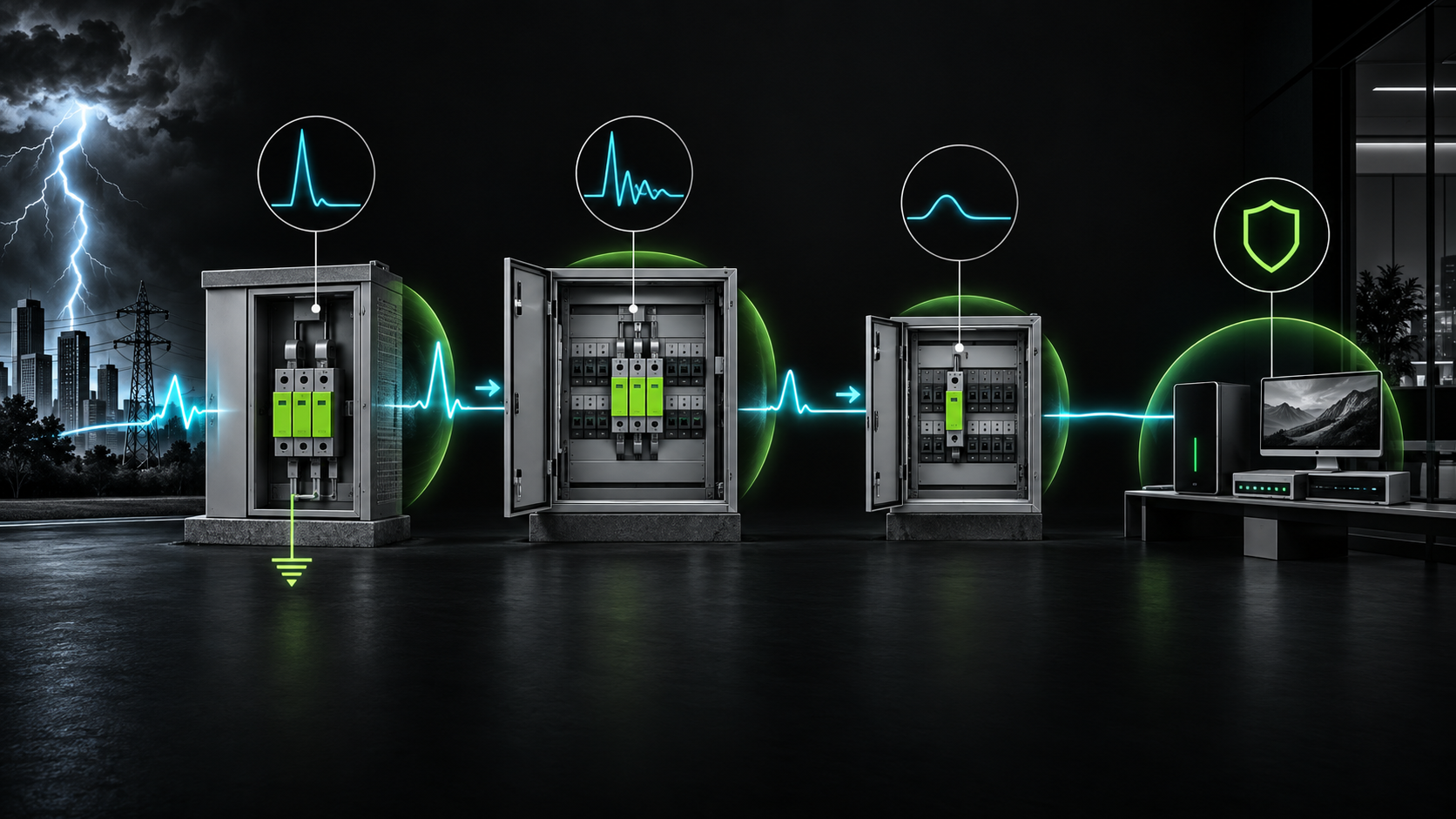
How many protectors?
Insurance context
Insurance treatment varies by insurer, plan, schedule, limits, excesses, optional benefits, exclusions and the actual cause. An SPD does not automatically secure a payout, and absence of a particular device does not prove automatic rejection. Check your current wording and preserve incident photographs, equipment details, installation records, assessments and repair evidence.
Primary technical references
Relevant routes
Clear answers before selection
A surge protective device limits transient overvoltage and diverts surge energy. It reduces risk but does not make equipment immune to every event or voltage disturbance.
No. Coordinated SPDs and a structural lightning-protection system have different roles. Direct strikes, induced lightning, utility switching and internally generated transients are not interchangeable.
There is no responsible universal number. The supply, earthing, exposure, board hierarchy, cable distances, sensitive loads and power, data and control lines must be assessed. Type 1, Type 2 and Type 3 devices have different coordinated roles.
No. Policy treatment depends on the insurer, plan, schedule, limits, excesses, optional benefits, exclusions and actual cause. Check current policy wording and preserve incident, installation and repair evidence.
Send the exact address or market, property type, supply and board information if known, existing SPDs or lightning system, critical equipment, event history, access details, authorised contact and safe closed-panel photographs.
Send a site brief
Send the address or market, property type, supply and board information if known, existing SPDs or lightning system, critical equipment, event history, safe closed-panel photographs, access details and authorised contact.