Map responsibility and dependencies
Identify the relevant main, common-area or tenant board, who may authorise work, the circuits it serves and any upstream or downstream dependencies.
Shopping-centre electrical services / distribution boards
Assessment-led distribution-board work for authorised shopping-centre stakeholders, with landlord/tenant/common-board responsibility, affected circuits and operational constraints identified before the scope is confirmed.
Inspection and testing determine whether to inspect, repair or rewire the internal board, complete a compliant upgrade or replace the assembly. A distribution-board enquiry does not automatically mean the whole property needs rewiring.
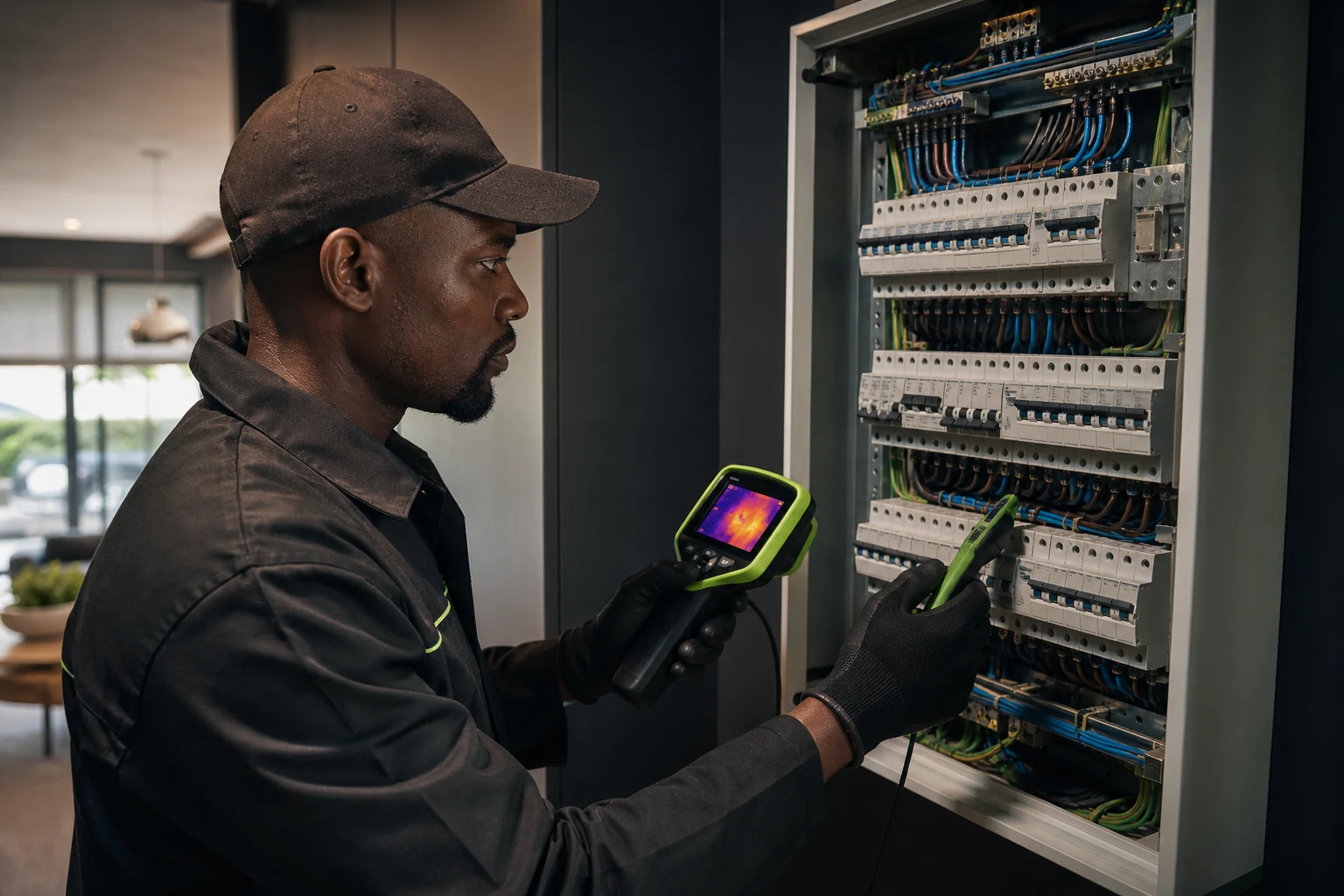
Assessment before scope
A shopping centre may contain landlord, common-area and tenant boards with different responsibilities and dependencies. Available records, board ownership, supply and metering boundaries, affected areas, critical loads, access and authorised shutdown windows must be established before repair, internal rewiring, upgrade or replacement is selected.
Identify the relevant main, common-area or tenant board, who may authorise work, the circuits it serves and any upstream or downstream dependencies.
Coordinate facilities and security access, public exclusion needs, tenant notices and authorised testing windows around the verified installation.
Record circuit identification, completed work and appropriate testing for each authorised stage, then provide factual board and schedule information.
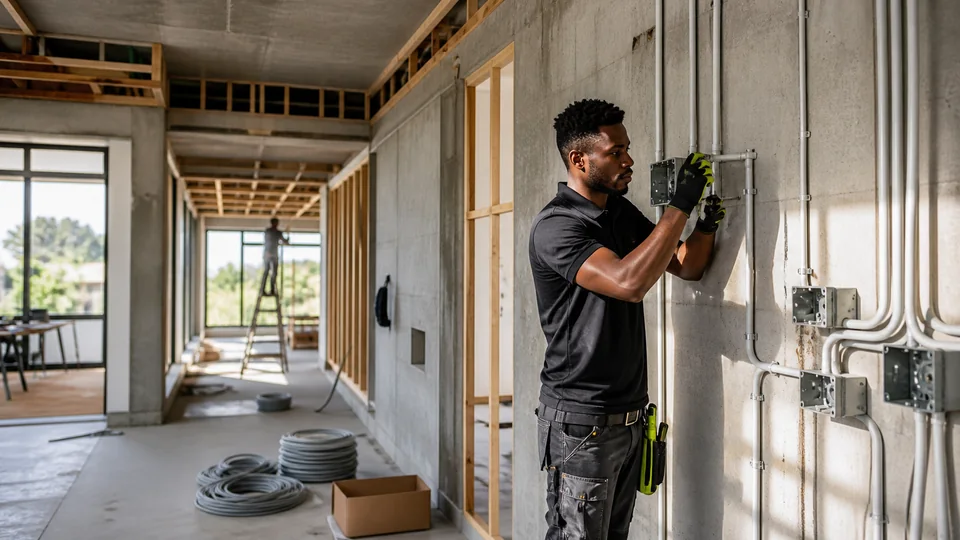
Safe preparation
Choose the correct owner
Common questions
No. Inspection and testing determine whether the suitable outcome is a defined repair, internal rewiring, an upgrade or replacement.
The authorised landlord, facilities representative or tenant may instruct work only within the relevant installation and responsibility boundary. That boundary must be confirmed before work starts.
Provide the relevant board and area served, available drawings and schedules, known defects or alterations, landlord and tenant responsibilities, access contacts, operational loads and acceptable shutdown windows.
Continuity cannot be assumed. The affected circuits and safe isolation requirements determine what must be shut down and how work can be staged.
Upstream and downstream dependencies are identified first. Each authorised board or stage is then planned, isolated, tested and recorded within the confirmed scope.
Not necessarily. Assessment, access, records, parts, shutdown authority, installation condition and the number of affected boards determine the required stages.
Inspection, testing and documentation follow the actual work and applicable legal requirements. Whether a new or supplementary certificate is required depends on the completed alteration and installation boundary.
Provide the exact address, property use and authority, reason for enquiry, safe photos of the closed board, visible labels, known alterations, connected energy systems, access and shutdown constraints. Technical scope and price follow assessment.