Evidence-led electrical diagnosis
Electrical fault finding that identifies the cause
Structured observation, boundary checks, inspection and testing for an electrical condition whose cause is not yet established.
This service begins with an unknown cause. It narrows the fault boundary, records findings and explains the proposed correction; additional work remains subject to authority. It does not promise repair before diagnosis.
Danger comes before diagnosis or repair.
If there is smoke, fire, unusual heat, arcing, exposed wiring, electric shock or water at electrical equipment, keep clear and use the relevant emergency or electricity-authority channel. Do not touch equipment that may still be energised.
Diagnostic sequence
Evidence before the proposed correction.
This service begins with an unknown cause. It narrows the fault boundary, records findings and explains the proposed correction; additional work remains subject to authority. It does not promise repair before diagnosis.
Observe safely
Start with the symptom and timing, affected areas or circuits, the operated protective device, recent work, weather, load and supply status.
Establish the boundary
Separate a public or network outage, shared or common distribution, the private fixed installation and connected equipment before assigning responsibility.
Test and report
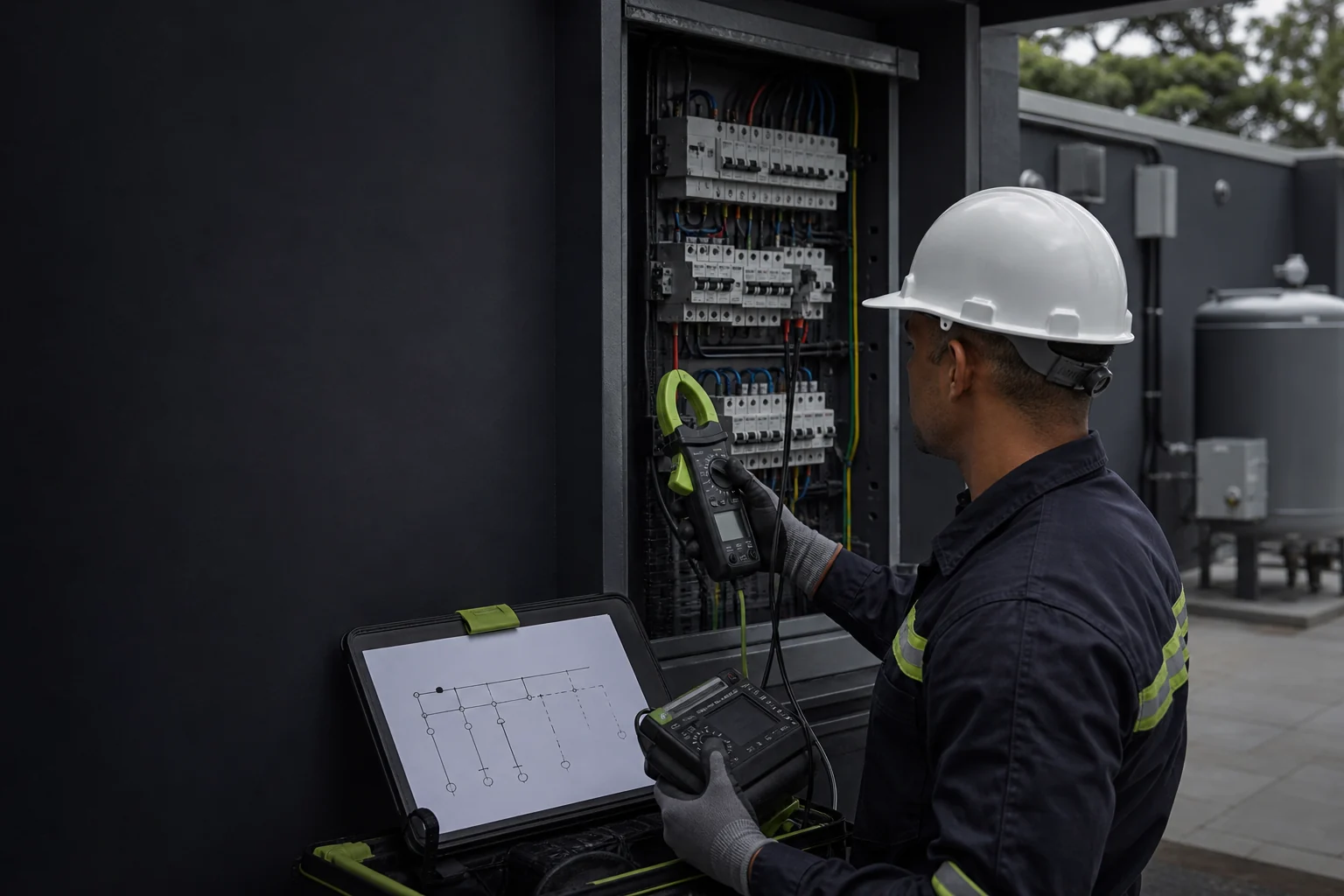
Inspect and test the relevant accessible installation, narrow the fault boundary, record findings and explain the proposed correction.
Gauteng service detail
Identify the installation boundary before assigning a cause
The starting brief separates supply, shared assets, the private fixed installation and connected equipment. It records what is known without turning a keyword or photograph into a diagnosis.
Record the pattern
Capture the symptom and timing, affected areas or circuits, which protective device operated, the weather or load pattern and any recent work.
Separate responsibility
Check supply status and distinguish a wider public or network outage, common distribution, the private installation and connected equipment.
Include system interfaces
Record any solar, inverter or generator interface so that the accessible installation can be tested within an agreed scope.
Safe preparation
Send the pattern without approaching danger.
Record ordinary observations and use safe closed-panel photos only. Do not repeatedly reset protection, do not remove covers, do not perform live tests and do not bypass protection. Keep people clear of heat, smoke, arcing, exposed conductors and water near electrical equipment.
- Exact address and property type
- Symptom and timing
- Affected areas or circuits
- Protective device that operated
- Weather or load pattern
- Recent work and supply status
- Solar, inverter or generator interfaces
- Authorised contact and access
Regional service owners
Choose the page for the exact service market.
Each regional owner adds property, access and responsibility context. West Rand requests remain subject to the exact address, distributor, scope and current service availability.
Fault finding RoodepoortMixed properties, multiple structures and outdoor routes where present.Fault finding SandtonApartment, office and managed-property responsibility.Fault finding MidrandEstate, business-park and mixed-installation access.Fault finding RandburgOccupant, owner and body-corporate authority.Fault finding CenturionDistributor, access and backup-system context.Fault finding West RandAddress-specific routing and current availability confirmation.
Related owners
Continue with the page that owns the next decision.
Diagnosis, authorised repair, board-specific work, urgent routing, education and cost guidance stay separate.
Questions
Electrical fault finding FAQ
Visible answers and structured FAQ data use the same wording.
What is the difference between fault finding and repair in Wesslink service markets?
Fault finding establishes the likely cause and the affected installation boundary through inspection and testing. Any proposed correction is explained after findings are available, and additional work remains subject to authority.
Can an intermittent electrical fault be found?
An intermittent condition can be investigated from its timing, loads, weather, affected circuits and recorded symptoms. A condition that is not present during attendance may require staged observations or further testing, so no single visit is promised to identify every cause.
Why does a breaker or earth-leakage device keep tripping?
Protective devices can operate for different conditions. The circuit, connected equipment, wiring, protection and relevant interfaces must be tested before a cause or repair is assigned.
Is partial power the same as an area outage?
No. Neighbouring supply, shared or common distribution, the private fixed installation and connected equipment must be separated before responsibility is assigned.
What should I record before fault finding in Wesslink service markets?
Record the symptom and timing, affected areas or circuits, which protective device operated, weather or load pattern, recent work, supply status and any solar, inverter or generator interface. Use safe closed-panel photos only.
What affects electrical fault-finding time and cost?
Access, whether the condition is present, installation complexity, circuit records, shared-property authority, testing scope and the findings all affect time and cost. The price guide explains the main variables without promising a fixed outcome.
Which electrical warning signs need urgent routing?
Smoke, fire, unusual heat, arcing, exposed wiring, electric shock or water at electrical equipment require people to keep clear and use the relevant emergency or electricity-authority channel before an ordinary service enquiry.
Start with the evidence
Request electrical fault finding
Send the address, responsible contact, safe symptom or trip pattern, affected circuits, access constraints and any relevant recent work or weather.