When electricity fails in Pimville, Protea, Protea Glen, Protea North, Dlamini and surrounding Soweto communities, the first useful question is not simply ‘when will it be back?’ It is ‘which electrical boundary is affected?’ A provider network fault, a complex distribution fault and a private installation fault require different people, evidence and safety decisions.
This guide uses documented local incidents to help residents, trustees, managing agents and businesses triage the symptom without pretending to diagnose it remotely. It explains when to contact Eskom or City Power, depending on the documented supply point, when a private electrician can help and what to record so the next response is based on evidence rather than repeated resets.
01
What recent local incidents teach us
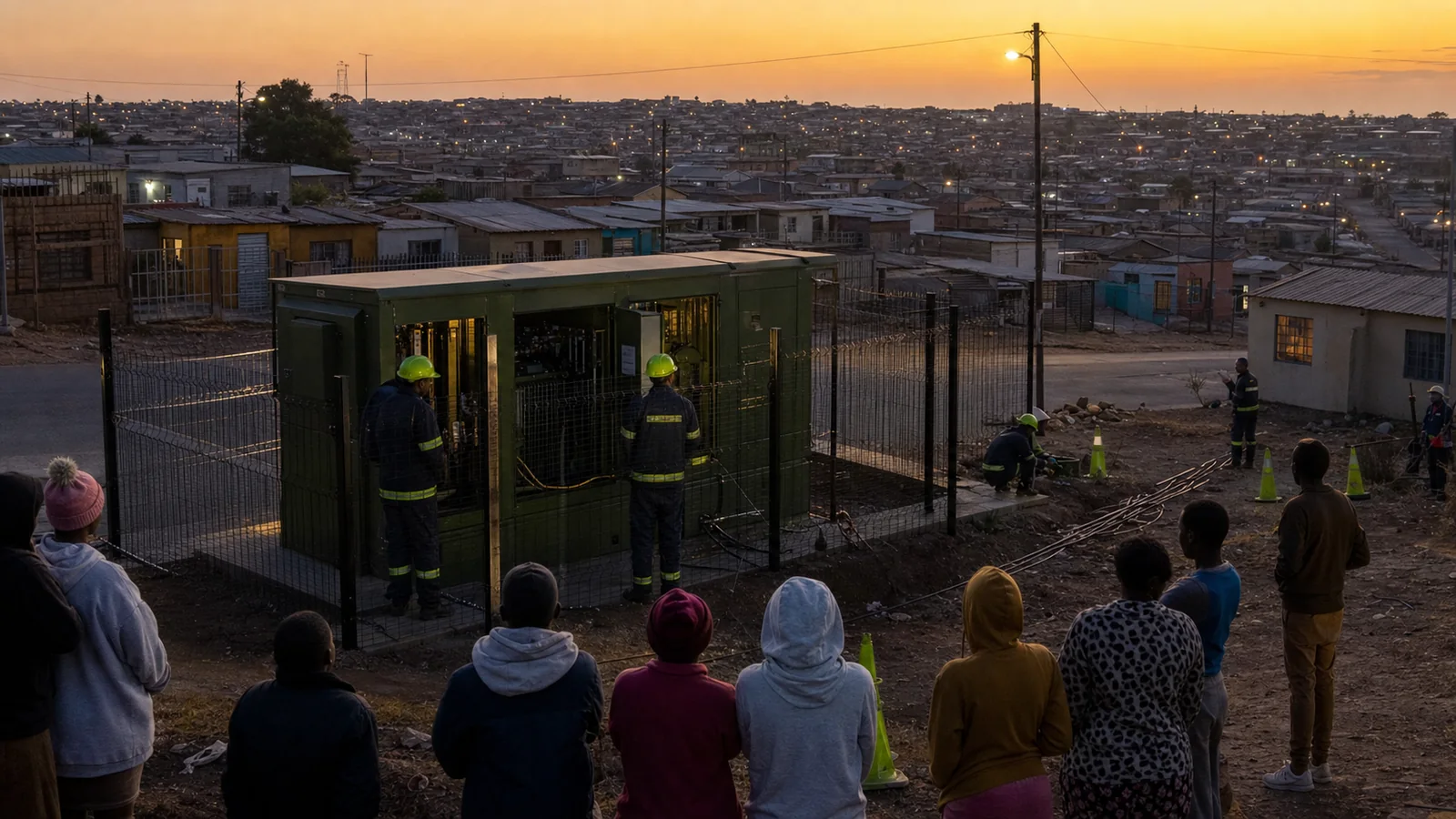
In January 2026, City Power linked a Pimville Zone 9 outage to a failed transformer and said repair planning depended on an area vending audit and replacement equipment. In September 2025, a separate Pimville interruption was attributed to stolen Eskom cables. In Protea North, reporting also recorded restoration delays when technicians could not access locked mini-substations. The supplier and exact supply point must therefore be confirmed for each incident.
This history is context, not a live outage notice. Current restoration status must always come from the responsible provider. The useful SEO promise of this page is also its practical promise: help a searcher decide the next safe, relevant action instead of recycling an unverified restoration time.
- Soweto Urban: Pimville transformer outage — Independent local reporting used for incident context.
02
Start with a three-minute fault-footprint check
Do not open a meter, street cabinet, mini-substation or distribution board cover. From safe, accessible positions, compare the property with the nearest neighbours, common areas and street lighting. Record the time, weather, sounds, smells and what changed immediately before the failure.
For a complex or business park, nominate one person to map affected buildings and retain the provider reference. A precise footprint is more useful than dozens of messages saying only that the power is off.
- Provider network: are multiple streets, streetlights or neighbouring complexes affected?
- Common property: are gates, pumps, lifts or shared lighting affected while the street has power?
- Meter and main supply: does the meter show normal status, an error or no indication? Do not break seals.
- Private installation: which boards, circuits and fixed loads remain off or trip?
03
Transformer failure and cable theft are not private repairs
A public transformer, mini-substation or utility cable can only be isolated and repaired by the responsible provider. Community members should keep access clear for authorised teams and must not open, lock, bridge or reconnect infrastructure themselves.
A private electrician becomes relevant when normal supply reaches neighbouring properties or the meter boundary but one home, shop or internal distribution section remains off, or when abnormal voltage has damaged the private installation.
04
Match the symptom to the most useful next call
The following patterns are triage clues, not remote diagnoses. More than one fault can exist at the same time, especially after storms, theft, cable damage or a major restoration.
- A full zone or transformer footprint is dark: confirm whether Eskom or City Power supplies that point and log with the correct entity.
- A cable-theft notice is issued: keep away from damaged infrastructure and preserve the official reference.
- The area returns but one home remains off: check meter indications and arrange private boundary testing without breaking seals.
- Supply returns with flickering, low voltage or missing circuits: isolate sensitive equipment and report the abnormal restoration.
05
Use the correct official reporting route
Direct Eskom customers can report and track supply loss through Alfred or Eskom’s official channels. City Power customers must use City Power fault logging. Use the account, token receipt or meter documentation to decide—never assume the provider from the suburb alone.
Have the account or meter number, exact address, contact details and fault footprint ready. Keep the reference and the time it was logged. Do not rely on an old community screenshot as proof of the current incident or a promised restoration time.
- Official Eskom Alfred fault-reporting information — Official provider source; verify current details there.
06
When an electrician can—and cannot—help
Wesslink can investigate distribution boards, protection, property cables, earthing and equipment after the supply boundary. The public transformer, utility cable, metering seals and provider audit process remain outside a private electrician’s authority.
A useful booking brief states whether neighbours have supply, whether every phase appears affected, which protection operated, whether backup power is installed and whether the fault followed restoration, weather or recent work. That information reduces wasted attendance and makes the investigation more decisive.
- Electrician Pimville — Local Wesslink service and property-support page.
- Electrician Protea Glen — Local Wesslink service and property-support page.
- Electrical fault finding — Evidence-led investigation for property-side faults.
- Contact Wesslink — Send the address, symptoms and provider reference.
07
Restore the property in a controlled sequence
Treat every conductor and supply point as live because the provider may restore electricity without warning. Keep large motors, compressors, geysers and sensitive electronics off until the supply has returned and appears stable. Then restore loads in a controlled sequence rather than all at once.
Check that all expected circuits, phases, common services and backup-power changeover functions have returned normally. If protection trips, voltage appears abnormal or equipment smells, buzzes or overheats, switch the affected section off and stop resetting it.
- Provider reference and stated restoration time.
- Actual time each building, phase or load centre returned.
- Any equipment that failed to restart or protective device that operated.
- Photographs taken only from safe, lawful positions.
- Private inspection findings and follow-up work where required.
FAQ
Questions readers also ask
How do I know whether the outage is a provider fault or my property?
Compare the closest neighbours, common areas, street lighting and meter status. A broad footprint points upstream; one property or one internal board points toward the service connection or private installation. Testing may still be required.
What should I do if only some lights or circuits work?
Switch off sensitive electronics and motor-driven equipment. The symptom can indicate a missing phase, abnormal voltage or a private circuit fault. Report the pattern specifically and arrange suitable testing.
Should I keep resetting a tripping main switch or breaker?
No. One controlled reset after removing obvious plug-in loads may sometimes provide information, but repeated operation can worsen damage or conceal a serious fault. Arrange diagnosis.
Can a private electrician repair the municipal or Eskom network?
No. Provider feeders, public transformers, mini-substations, street pillars and sealed metering equipment belong to the responsible utility. An electrician can work on the authorised private installation after the supply boundary.
What information should I send when requesting electrical fault finding?
Send the exact address, affected footprint, provider and reference, meter indications, protection that operated, backup-power details, recent work, time of failure and any safe photographs.
Can Wesslink replace a municipal or Eskom transformer?
No. Public-network transformers and cables belong to the responsible utility. Wesslink can assess and repair faults within the private installation once the provider boundary is clear and safe supply is available.


