Earth-leakage protection is designed to disconnect when the installation presents conditions that require protection. Repeated tripping can be linked to one appliance, moisture, damaged wiring, cumulative leakage or a fault within a circuit.
The correct response is evidence-led testing. Swapping the device or increasing protection without finding the cause is not a diagnostic method.
01
Record the pattern without bypassing protection
Note whether the trip follows rain, a geyser cycle, pool equipment, outdoor lighting or a particular appliance. Record the time and which circuits were in use.
Do not hold a device on, tape it, bypass it or repeatedly reset it. Keep people away from wet or damaged electrical equipment.
- Time and weather conditions.
- Appliances or fixed equipment operating.
- Circuits that were recently altered.
- Whether the trip is immediate or delayed.
- Any burning odour, water entry or damaged sockets.
02
Why testing comes before parts
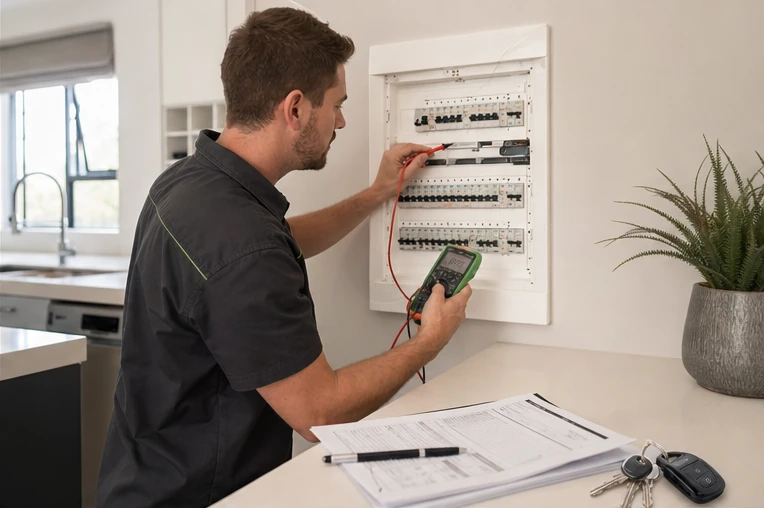
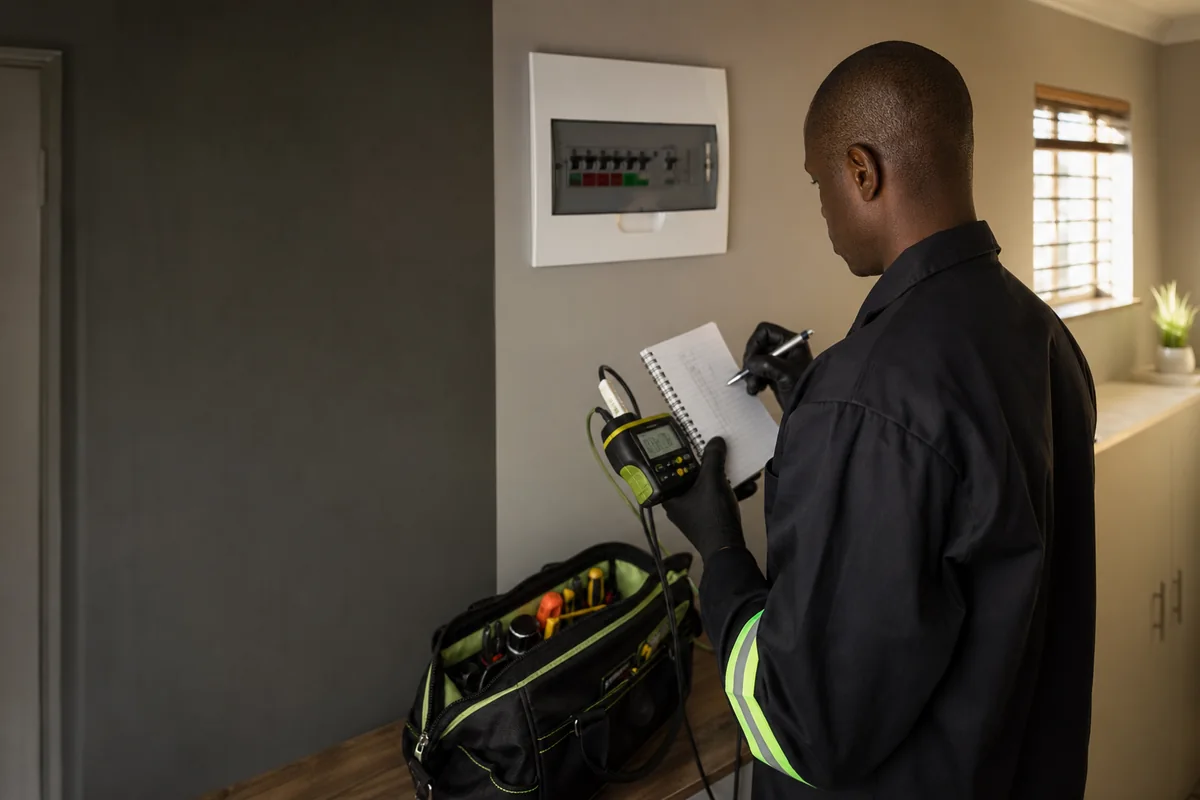
Several different faults can create the same tripping symptom. Insulation, leakage and circuit tests help narrow the cause without assuming the protective device itself is defective.
Applicable electrical requirements and safe isolation still matter during fault finding; a successful reset is not proof that the installation is healthy.
- Electrical Installation Regulations — Official Department of Employment and Labour regulations.
- Department of Employment and Labour COC notice — Official compliance guidance for owners, businesses and contractors.
03
What a useful fault-finding visit should produce
The client should receive an explanation of the probable cause, the circuits or equipment tested, the immediate safety position and the recommended repair route.
Where the fault is intermittent, the first visit may produce a monitoring or isolation plan rather than an invented guarantee.
- Electrical fault finding in Randburg — Local Wesslink electrical service and property guidance.
- Contact Wesslink — Send the address, property type and the symptoms or work required.
04
Build a fault history before the visit
The most useful description is not simply “earth leakage trips”. Record the time, weather, appliance or fixed load in use, affected rooms and whether the device resets immediately or only after equipment has been disconnected.
A short, accurate history helps the electrician choose the right test sequence. It also reduces the risk of replacing the protective device before the actual leaking circuit, damaged appliance or moisture path has been identified.
- Which protective device operated.
- What was running immediately beforehand.
- Whether rain, cleaning or a plumbing leak preceded the trip.
- Which ordinary plug-in appliances were disconnected.
- Any heat, odour, buzzing or visible damage observed from a safe distance.
05
What a useful close-out should explain
The close-out should identify the circuit or equipment involved, the finding, the authorised repair and the testing performed afterwards. “Reset and working” is not a meaningful record for a recurring fault.
Keep the result with the property maintenance file. If the symptom returns, the next technician can work from evidence rather than starting from zero.
FAQ
Questions readers also ask
Does a tripping earth leakage mean the device is broken?
Not necessarily. It may be operating in response to leakage elsewhere. Testing should establish the cause before replacement.
Can rain cause earth-leakage tripping?
Moisture entering outdoor fittings, damaged cables or equipment can contribute, but the actual circuit still needs to be identified and assessed.
Can I unplug appliances to find the fault?
You may safely record whether a normal plug-in appliance coincides with the trip, but do not open equipment, bypass protection or work inside the board.