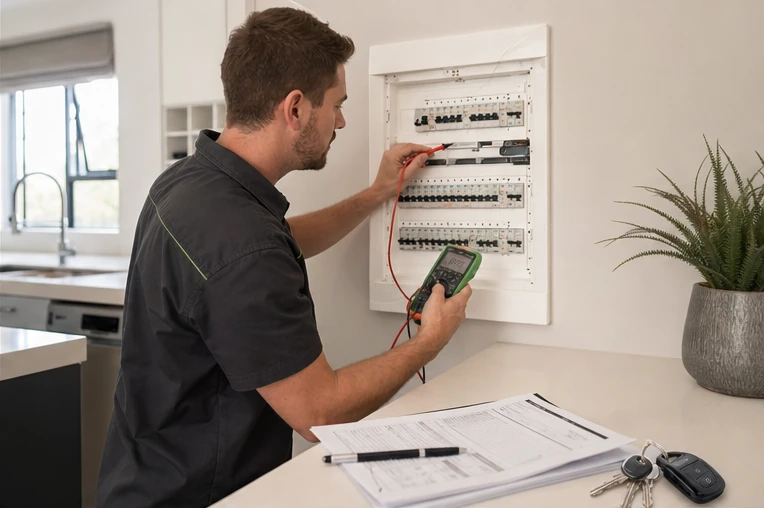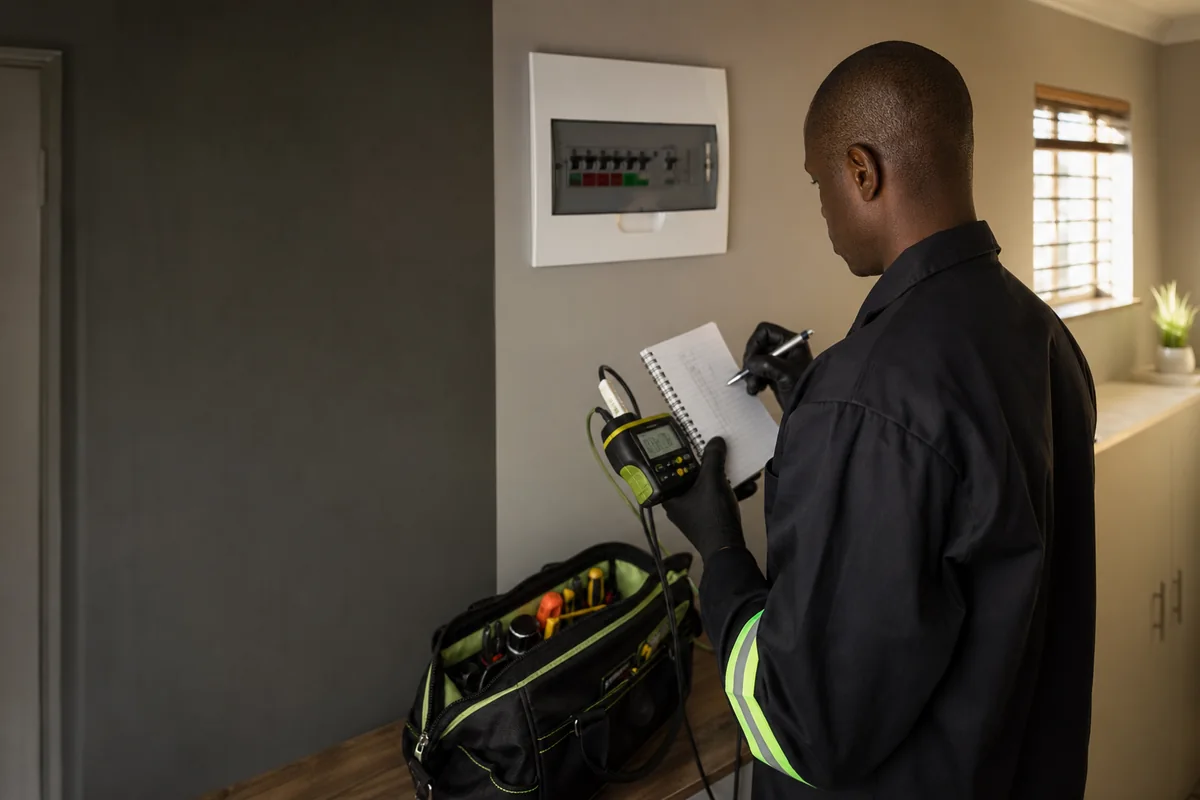
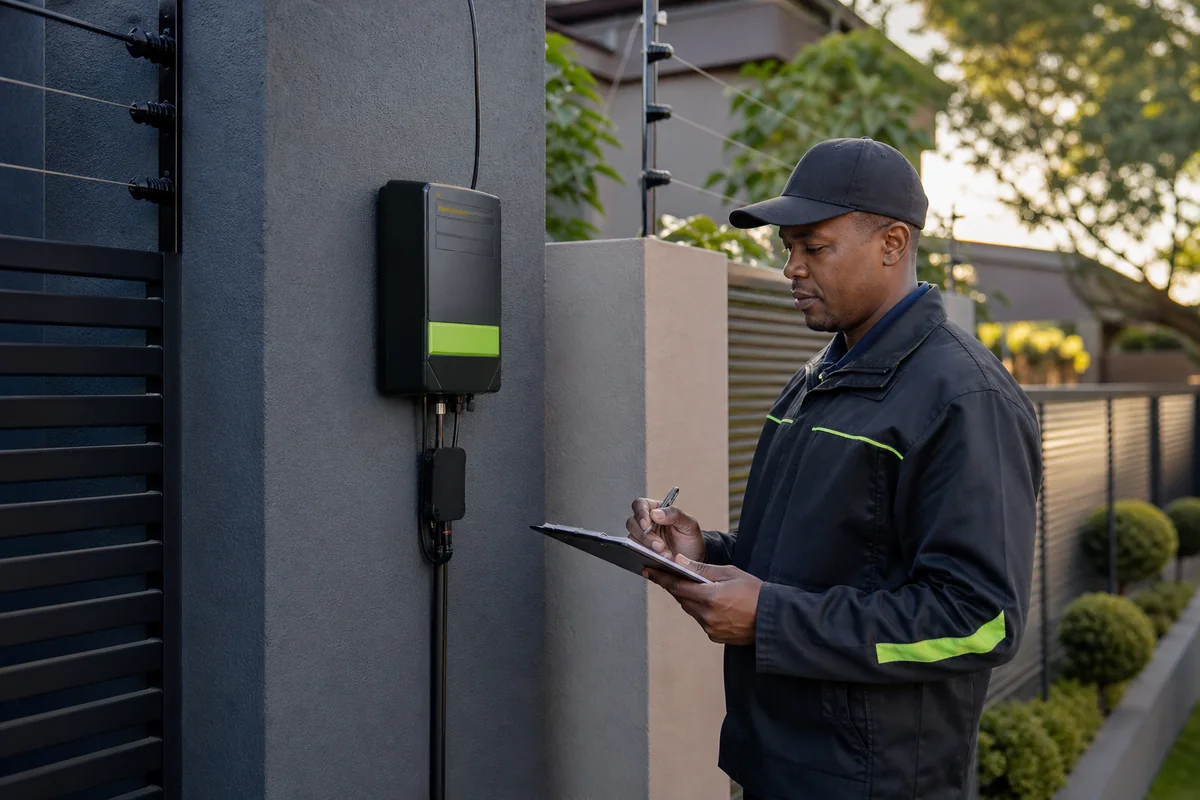
An electric fence is not simply another circuit on the general household certificate. Sellers should identify the energiser, fence extent, gates, warning signs and alterations before the transfer deadline becomes urgent.
The practical goal is to give the registered or appropriately authorised service provider safe access and honest records so the present installation can be assessed.
01
Prepare the fence and its records
Locate previous fence documents, energiser details and any invoices for extensions or repairs. Confirm whether the fence is owned privately or forms part of common property.
Clear vegetation only where this can be done safely and without touching live conductors. Do not conceal damaged sections before inspection.
- Property and transfer details.
- Energiser position and access.
- Fence alterations or extensions.
- Shared or common-property boundaries.
- Known faults, storm damage or gate changes.
02
Keep certificate scopes distinct
The general electrical installation and an electric-fence system have different certification contexts. Confirm exactly which certificates the sale agreement or conveyancing instruction requires.
Ask who is authorised for each certificate and what remedial work process applies if defects are found.
- Electrical Installation Regulations — Official Department of Employment and Labour regulations.
- Department of Employment and Labour COC notice — Official compliance guidance for owners, businesses and contractors.
03
Book early enough for corrective work
Fence faults can involve access, vegetation, gates, damaged supports or equipment that is not immediately available. Booking early gives the owner time to review and authorise work.
Share the transfer target date, but do not pressure a contractor to certify an installation before the required assessment and repairs are complete.
- Electrician in Randburg — Local Wesslink electrical service and property guidance.
- Contact Wesslink — Send the address, property type and the symptoms or work required.
04
Keep the fence certificate separate from the general electrical COC
An electric-fence system certificate and the certificate for the electrical installation cover different scopes and are issued under different regulatory provisions. A property sale may require both, depending on the installation and transaction.
Ask the conveyancer what must be delivered, identify who controls shared boundary fencing and arrange access early enough for defects to be explained and corrected without last-minute pressure.
- Electrical Machinery Regulations, 2011 — Official provisions governing electric-fence system certificates and registered installers.
- Electrical COC service — Wesslink property-transfer electrical compliance support.
05
Create a fence handover file for the next owner
Retain the certificate, energiser information, installer details, alteration records and any maintenance or repair notes. Mark which parts of the fence are private, shared or common property.
This does not replace inspection of the current system, but it gives the owner, estate agent and installer a far clearer starting point.
FAQ
Questions readers also ask
Is an electric-fence COC the same as the house electrical COC?
No. They relate to different installation scopes. Confirm which certificates are required for the specific transaction.
Who should arrange the fence certificate?
Check the sale agreement and conveyancing instructions. The owner commonly coordinates access, but the actual agreement controls.
Does a fence extension affect the existing records?
Alterations should be disclosed and assessed as part of the present installation. Provide any available documents.