The wider road or precinct is also affected
- Compare adjacent properties and streetlights
- Confirm the electricity provider from the account, token or estate record
- Retain the official outage reference before private testing
Sandton service hub / Fourways
Electrical support for Fourways estates, complexes, retail and business premises—with provider, private and managed-property boundaries clarified first.
Tell us the property type, exact suburb and what changed. We will help separate a municipal outage from a private electrical fault before attendance.

FIRST DECISION
Fourways contains multiple property types and supply arrangements. Confirm the provider from the account or meter and compare the fault across neighbours and common systems.
Immediate danger? Keep clear of exposed conductors, smoke, sparks or water near electrical equipment. Switch off only if it is safe to do so and call emergency services where necessary.
CHOOSING THE RIGHT LOCAL ROUTE
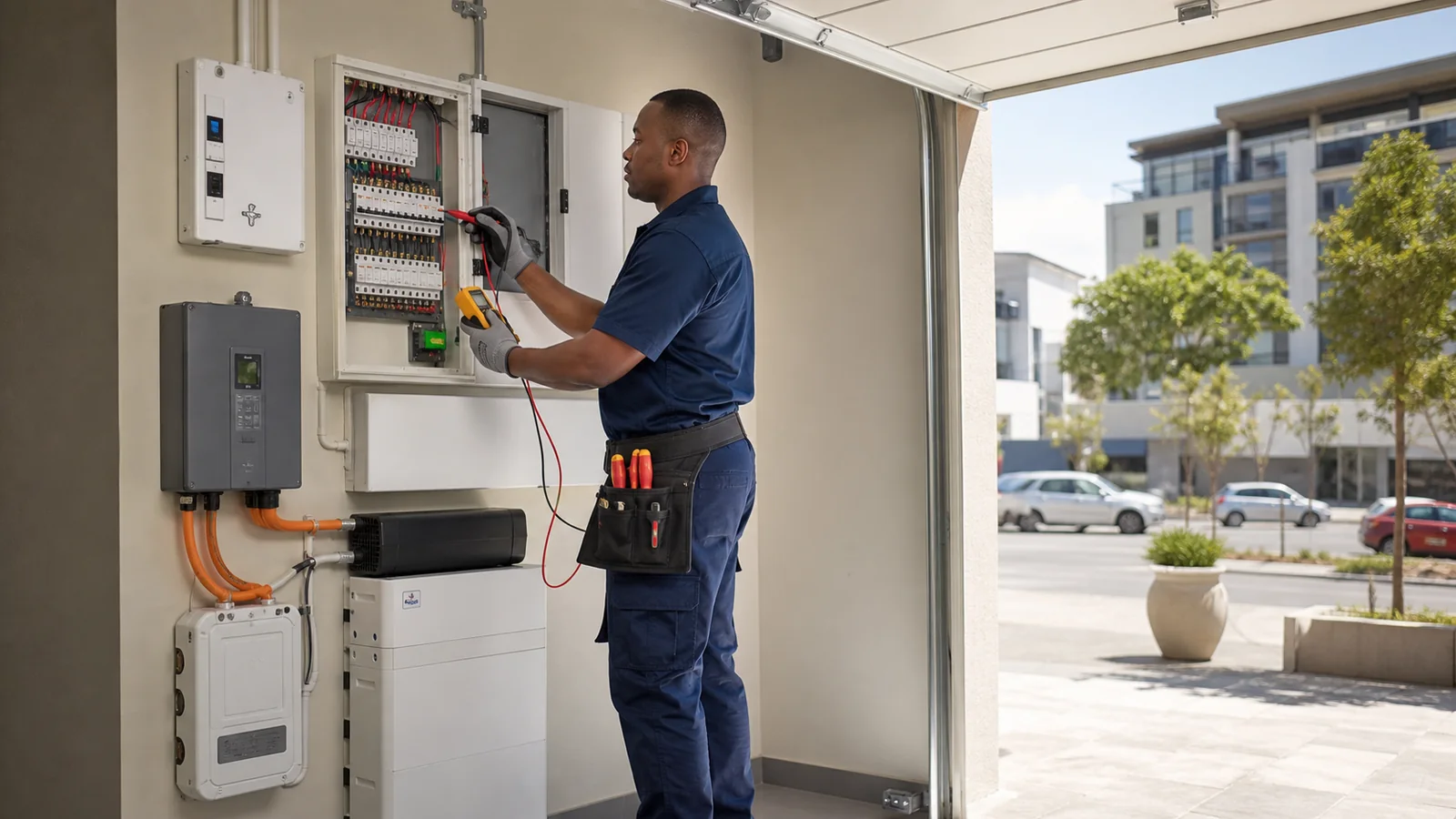
Electrician Fourways support should match the property, supply boundary, access route and electrical outcome rather than a generic call-out label.
An electrical compliance certificate Fourways enquiry should identify the relevant installation, board access, alteration history and intended deadline before inspection is arranged.
Electrical COC Fourways work requires inspection and testing, a clear remedial scope where needed, and successful retesting before certification can be considered.
When comparing the best electrician in Fourways for the property, use traceable business details, a relevant scope, accountable communication and genuine client feedback rather than slogans.
For an electrician near me in Fourways, send the full address, property type, affected area, what changed, what still works and any estate, complex or landlord access requirements.
LOCAL PROPERTY CONTEXT
A freestanding home, estate, shopping premises and office cannot be handled as interchangeable call-outs. The correct route is based on supply ownership, access and operational risk.
Explore the Sandton service hub →Security clearance, private distribution and common services should be coordinated before attendance.
Refrigeration, point-of-sale and trading hours require controlled shutdown planning.
Unit, meter and common-property boundaries should be identified before invasive tests.
Inverters, generators and essential-load circuits must integrate safely with the main installation.
ELECTRICAL COC IN Fourways
If you are searching for an electrical certificate of compliance in Fourways, the useful starting point is the installation—not the document alone. Inspection and testing establish whether remedial work is required before certification.
The accessible fixed installation is inspected and tested. Distribution boards, circuits, protection, earthing and relevant additions are considered within the agreed scope.
Understand the COC process →If relevant defects are identified, the findings define the corrective work. Certification follows only after the required work and retesting have been completed successfully.
Arrange an inspection →Homes, rental properties, complexes and estates can involve owners, tenants, trustees and managing agents. Confirming access and approval routes early reduces avoidable delays.
Managed-property support →Shops, offices and operating businesses may need inspection work coordinated around landlords, facilities teams, occupation conditions and operating hours.
Commercial support →Property size, the number of boards and circuits, access, installation records and additions such as pools, gates, outbuildings or backup power can affect the inspection scope. Any remedial work and return testing should be described separately from the initial inspection.
Review electrical COC cost factors →Share previous certificates where available and identify renovations, extensions, added circuits, outbuildings, pools and backup-power equipment before the inspection begins.
Read the property-transfer guide →This page connects Fourways to Wesslink’s wider Sandton service hub while keeping the inspection scope tied to the condition and history of the individual installation.
View the Sandton hub →FOURWAYS ELECTRICAL SERVICES
Each route begins with the same discipline: understand the installation, test the relevant circuits, explain the findings and agree the next practical step.
Inspection, testing and a clear remedial scope where defects prevent certification.
Understand the COC process →Tripping, partial power, overheating, damaged circuits and repeat failures traced methodically.
See fault-finding support →DB assessment, circuit identification, protective-device concerns and corrective work.
View electrical services →Structured reporting and access coordination for estates, body corporates and managing agents.
Coordinate an inspection →Planned maintenance, defect response and practical scheduling around occupants and operations.
Commercial support →Assessment of how inverters, generators and changeover arrangements interact with the installation.
Backup-power services →A BETTER FIRST CONVERSATION
Provide the exact development or business, provider information, affected area, access contact and operating constraints.
WHAT ACCOUNTABILITY LOOKS LIKE
Trust is created by a clear process—not by making claims that the page cannot prove.
Confirm location, affected circuits, property type, access and whether the wider area is also without power.
Follow the symptom through the installation and explain what evidence supports the proposed scope.
Record the work completed, remaining risks or recommendations, and the correct next action where required.
FOURWAYS ELECTRICAL QUESTIONS
Property size, the number of boards and circuits, access, installation records and later additions can affect the inspection scope. Any remedial work and return testing should be itemised separately. Certification follows only after the applicable inspection, testing and required corrections are completed successfully.
Arrange inspection and testing for the relevant installation. Provide the property type, access arrangements, certificate history and known alterations. If defects are found, the remedial scope and retesting must be completed before certification can be considered.
No. Relevant defects must be corrected and the required inspection and testing completed before the certification process can be concluded.
Arrange access to distribution boards, rooms, garages, outbuildings and other relevant parts of the installation. Locate previous certificates or alteration records where available and explain who controls access.
An older certificate may not cover electrical work completed after it was issued. Tell the electrician about renovations, extensions, added circuits, backup-power equipment and other changes.
No. They relate to different installations and compliance processes. A property may require both, but one certificate does not automatically include the other.
Check the municipal account, prepaid token, meter information and estate records. Do not assume the provider from the suburb alone.
Yes. The estate contact should provide access, affected-property information and authority for common equipment or shutdowns.
Yes, when building access, isolation and critical-load arrangements are agreed in advance.
Relevant fixed additions and alterations must be considered when the applicable installation is inspected and tested.
Record which boards, phases or circuits remain on, avoid opening covers and arrange testing if the problem is private.
NEARBY SERVICE ROUTES
These are the closest useful locality routes. The complete organised directory remains on the Sandton service hub.
LOCAL ELECTRICAL PLANNING
For a Fourways property, confirm the address, development and existing supplier information before choosing between provider support, estate management and private electrical assessment.
Use an account, prepaid receipt or authorised management record to identify the relevant supplier or support route. Do not guess it from the suburb name. Keep a reference already issued and distinguish that information from assumptions about which organisation owns a particular cable or board.
Record the home or business symptoms and any known common-system or neighbouring-property reports. State who supplied those reports. The pattern helps route an enquiry, but the actual electrical and responsibility boundaries may still require confirmation.
When an assessment is arranged, send the history and existing references together. Ask for findings to identify the relevant boundary and next responsible contact. Keep private repairs, estate work and provider responses separately recorded so progress in one route is not mistaken for completion of all outstanding issues.
BEFORE THE VISIT
Plan your next step
ELECTRICAL HELP IN FOURWAYS