Map the electrical responsibility
Identify the incoming supply, affected buildings, common and tenant boards, existing changeover paths and the party responsible for each interface.
Centre, tenant and common responsibility
Generator electrical assessment, changeover and essential-load integration for shopping centres, subject to equipment, responsibility, access, design, authority and availability.
A shopping-centre generator project crosses more than one board and more than one operational team. Useful planning identifies who may instruct work, which equipment is common or tenant-controlled, how essential loads are prioritised, and when controlled isolation and testing can occur.
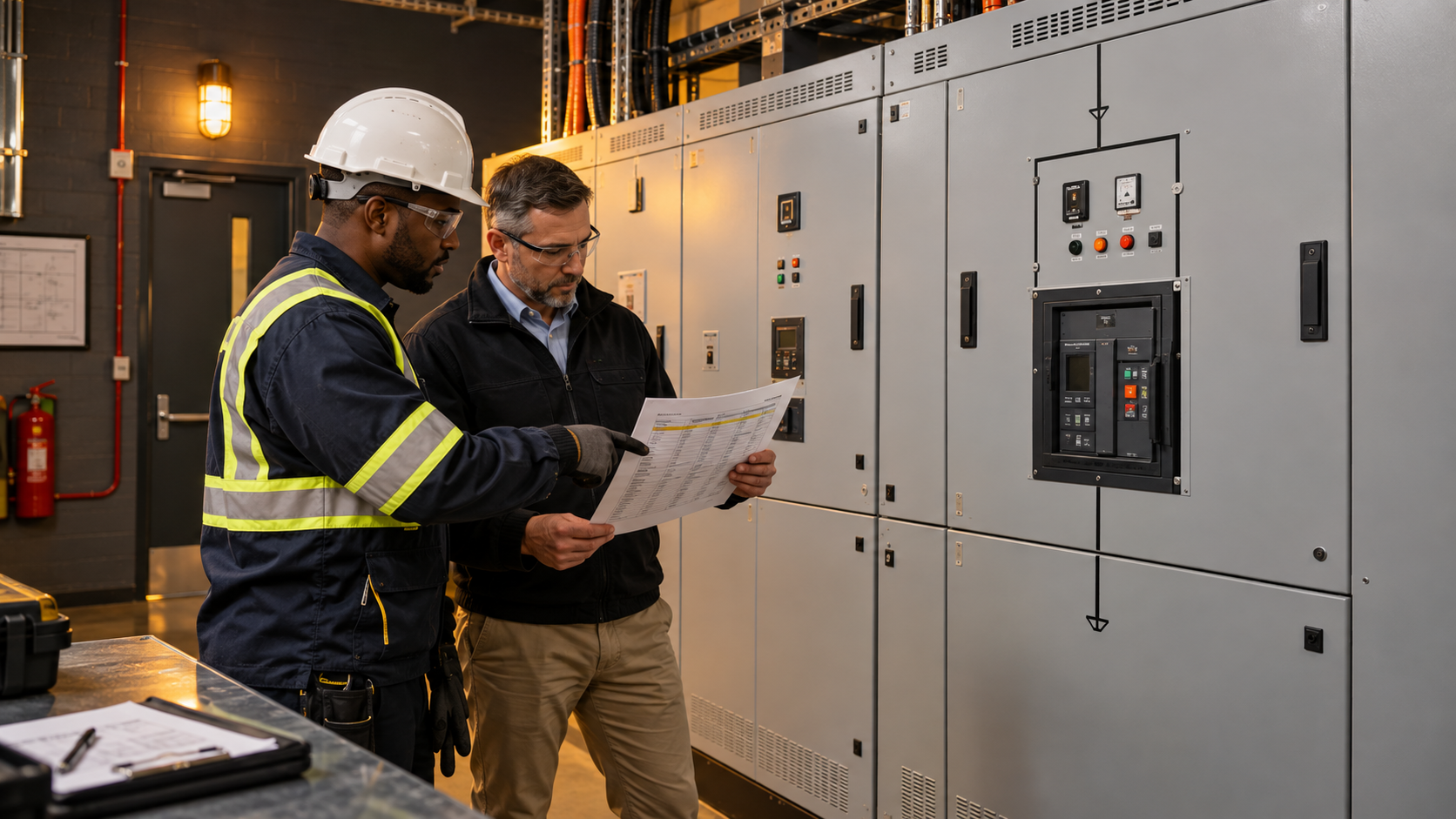
Managed electrical interface
Identify the incoming supply, affected buildings, common and tenant boards, existing changeover paths and the party responsible for each interface.
Record operating hours, public exclusion needs, tenant notices, security access, critical activities and acceptable shutdown or staged-testing windows.
Document isolation, labels, test results, agreed operating information, unresolved dependencies and the people responsible for generator, mechanical, fuel or authority actions.
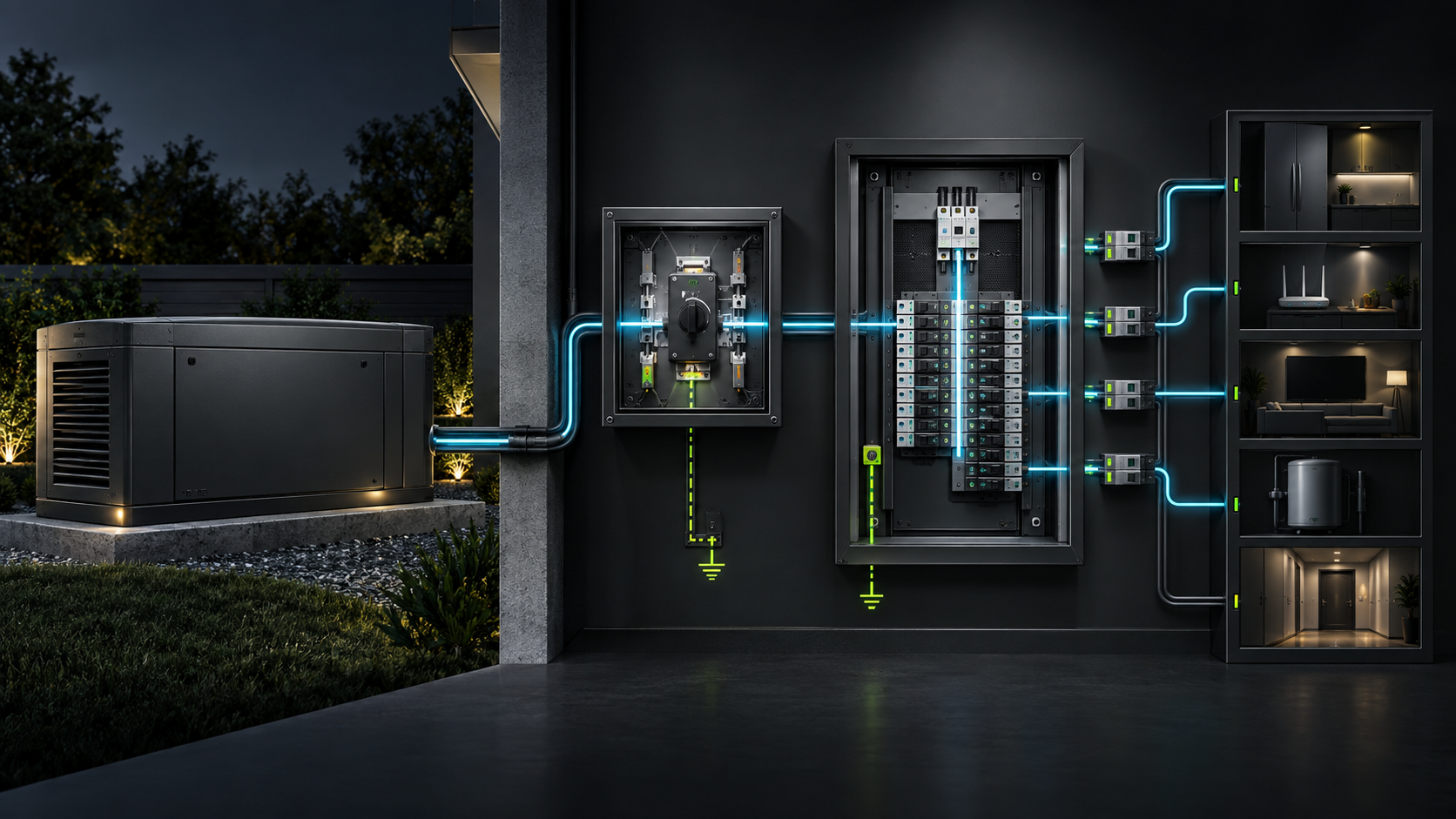
Electrical scope boundary
Generator supply, manufacturer commissioning, engine service, fuel, exhaust, ventilation, noise, civil, structural, fire-system, utility and maintenance responsibilities remain separate unless expressly included.
Operating mode matters
The actual configuration, protection and distributor process must be verified. No socket backfeed, improvised lead, bypassed interlocking, live changeover access, cover removal or DIY connection/testing instruction is provided.
Prepare the assessment
A list or photograph cannot size the generator remotely. Connected loads, starting currents, diversity, phase arrangement and balance, existing supply and boards, route, protection, changeover equipment, operating mode and current manufacturer data determine design.
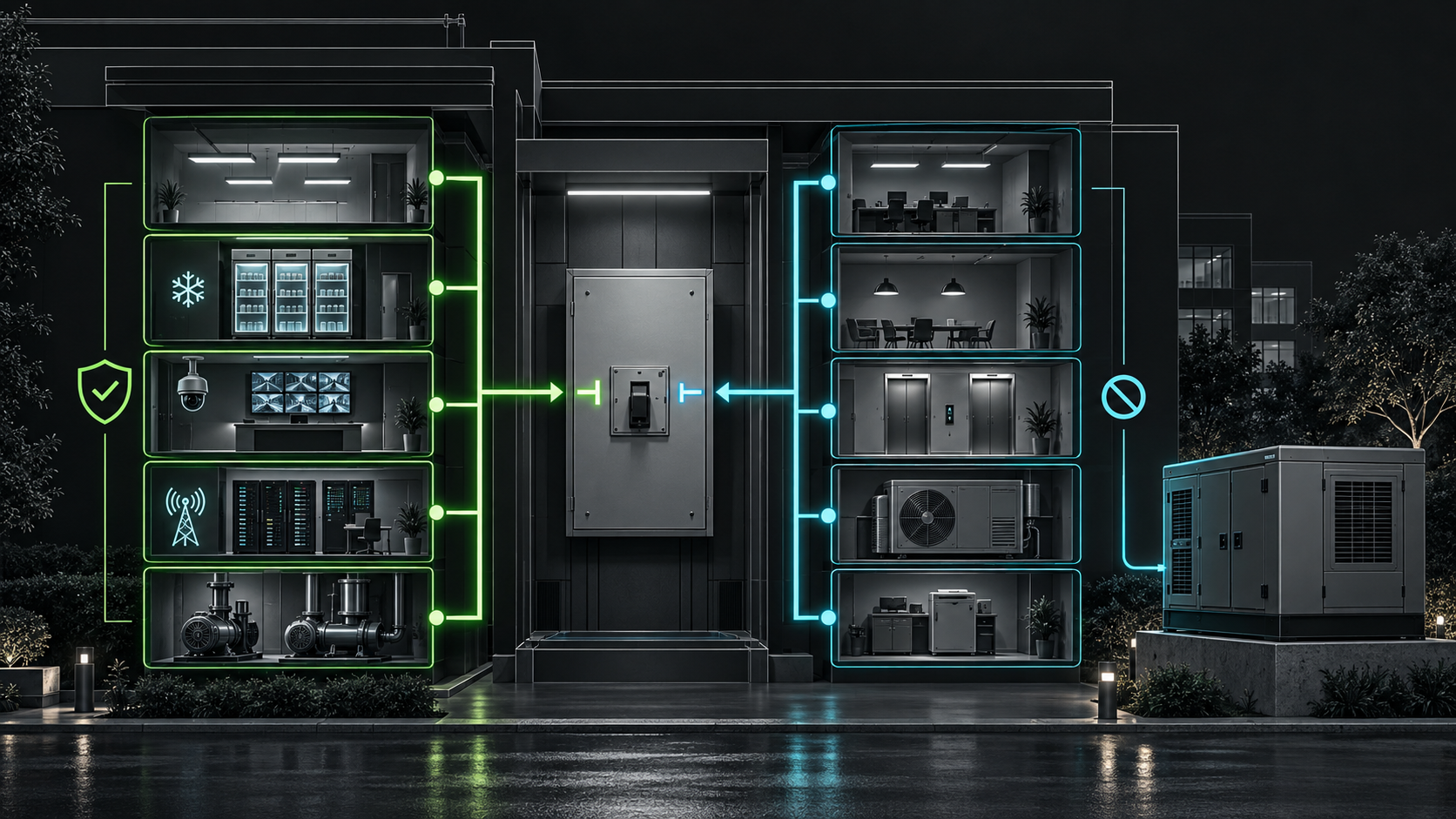
Questions before approval
No. The electrical interface covers supply and boards, changeover, isolation, protection, earthing, cabling, labelling, testing and relevant documentation. Generator supply, engine service, fuel, exhaust, ventilation, noise, civil, structural and fire-system work need separately named scope and responsible parties.
The instructing person must have authority for the affected installation and access. Landlord, facilities, HOA, body-corporate, managing-agent, tenant, resident and utility responsibilities should be separated before work is approved.
It records which identified loads management proposes to support and the operational priority. It does not prove generator capacity; verified load data, starting currents, diversity, phase arrangement and the existing installation still inform design.
No. Remote information can help prepare an assessment, but sizing depends on measured or verified loads, starting currents, diversity, phases, supply, boards, routes, protection, operating mode and current manufacturer data.
They use different controls and operating arrangements. Suitability and expected behaviour must be assessed against the actual equipment, interlocking, protection, supply and management process; automatic transfer performance is not promised by the page.
Standby non-parallel, non-export, export and off-grid configurations can have different technical and authority requirements. The actual mode and distributor process must be confirmed rather than inferred from the property type.
The authorised team identifies controlled areas, isolation windows, affected occupants or operations, security arrangements, public exclusion and the sequence for inspection, testing and handover.
No. The design and agreed testing establish specific electrical functions and findings. The page does not guarantee zero downtime, uninterrupted trading, common services, automatic transfer or reopening times.
Inspection, testing, documentation, COC and distributor implications depend on the installation, work and operating mode. The applicable legal scope and the actual distributor's current process must be established.
Provide the address, distributor, authorised contact, responsibility boundaries, affected boards and loads, rating-plate and manufacturer data, verified supply details, changeover information, operating mode, interfaces, access constraints, shutdown windows, previous records and safe closed-equipment photos.
Preserved supporting owners
Eskom connection references identify applicable generator and authority inputs. Eskom network-configuration guidance distinguishes operating modes. Applicable fixed electrical work remains subject to South Africa's Electrical Installation Regulations. Use the actual distributor's current process.
Authorised details first
Send the authorised load and changeover details so responsibility, access, operating constraints and the electrical assessment can be scoped without promising capacity, runtime, continuity, approval or availability.
Send the authorised load and changeover details