Loads and mode
Define essential loads and whether operation is standby, off-grid or network-parallel.
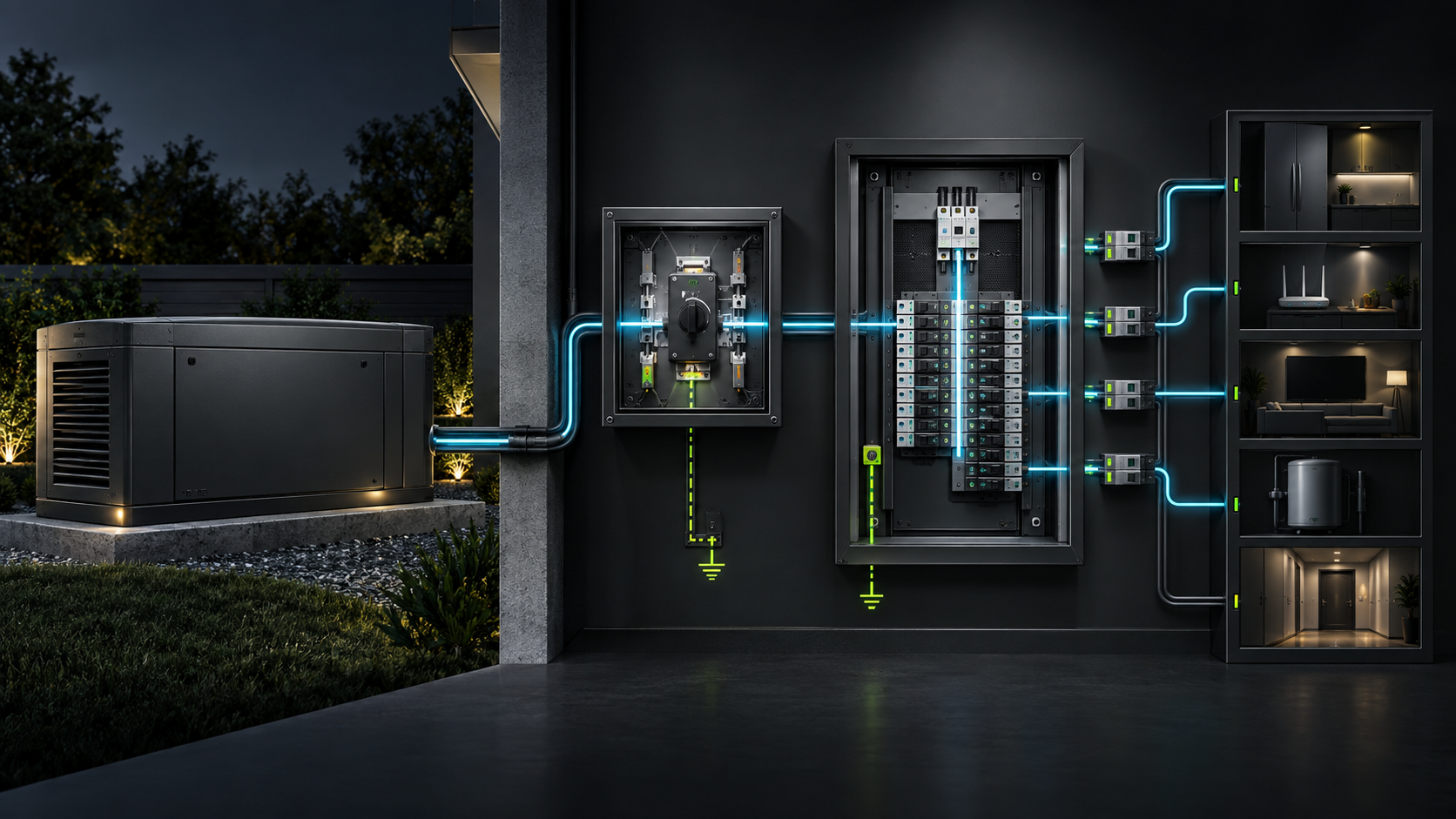
Core assessment
Electrical assessment, changeover integration, fault finding and remedial work for generator systems across Gauteng, subject to equipment, authority, scope and availability.
Electrical interface first
Define the generator electrical interface, essential loads and operating mode before specifying changeover, isolation, protection or cabling.
The assessment covers the electrical interface. Generator supply, mechanical service, fuel, exhaust, ventilation, acoustic treatment, civil work, utility approval and maintenance are separate unless expressly included.
Define essential loads and whether operation is standby, off-grid or network-parallel.
Assess manual or automatic changeover, safe isolation and authorised shutdowns.
Review earthing, protection, cabling, labelling, testing and COC implications.
Safe assessment
Do not back-feed through a socket, bypass protection or work on live changeover equipment. Send rating-plate details and safe photographs of closed boards; an authorised inspection determines the actual condition and scope.

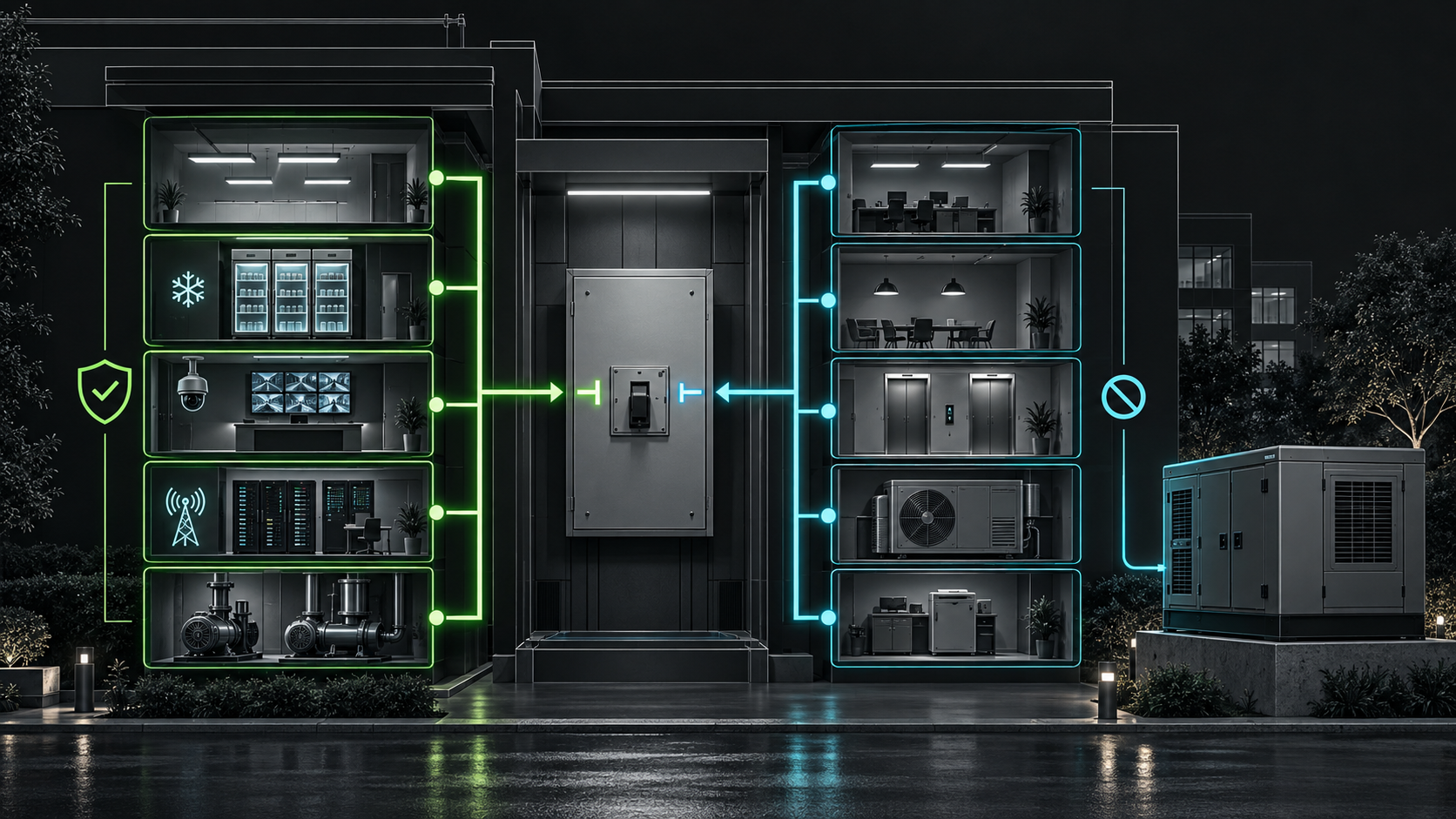
No remote sizing
Actual demand, starting current, phase balance, supply arrangement, conductor route, protection and manufacturer data determine the scope. A page cannot promise generator capacity, runtime, fuel use, transfer performance or zero downtime.
Network configuration
Eskom notes that configuration can change legal, technical, tariff and metering requirements. Confirm the actual operating arrangement and distributor before stating application, registration or approval requirements. No approval outcome is promised.
Primary references
Supporting routes
Send a useful brief
Include the address, property use, generator make, model and rating plate, existing or new system, essential loads, supply and phase if known, boards and changeover, symptoms, operating constraints, authority and safe closed-panel photos.
Generator electrical FAQs
The electrical scope can include load definition, boards, manual or automatic changeover, isolation, protection, earthing, cabling, labelling, testing, commissioning interface and COC implications. Generator supply, mechanical service, fuel, exhaust, ventilation, acoustic or civil work are separate unless expressly included.
Neither is universally correct. The operating need, generator controls, supply arrangement, authority, protection and manufacturer data determine an appropriate assessed solution.
List the loads that must operate, their actual demand and starting characteristics, phase arrangement and operational priority. Generator size and runtime cannot be selected responsibly from a short online description.
Changes to fixed electrical installation work can affect inspection, testing and certification scope. The registered person must assess the actual alteration and evidence before a certificate can be considered.
No. First determine whether the system is standby, off-grid or operates in parallel with the network. Legal, technical, tariff, metering and distributor requirements can differ by configuration.
Wesslink can assess the agreed electrical interface, symptoms, changeover, boards, protection and test evidence. Mechanical engine or alternator service remains a separate specialist scope unless expressly included.
The actual loads, starting current, phase balance, supply arrangement, conductor route, boards, changeover, protection, access, shutdown constraints, manufacturer data and required testing affect scope. No fixed price or remote sizing is promised.