A high electricity bill can result from a reading issue, a longer billing period, tariff or account changes, increased consumption, a defective appliance or an electrical problem on the private installation. Those possibilities should be separated before a dispute is lodged or equipment is replaced.
This checklist helps Sandton residents, landlords, businesses and managing agents build a usable evidence pack. It does not estimate what the bill should have been and it does not promise a refund. The objective is a clearer query and a faster technical investigation where one is justified.
01
Compare the bill period before comparing the amount
Start with the number of billing days, the opening and closing readings, the meter number and whether the readings are described as actual or estimated. Comparing only the rand amount can be misleading when one bill covers more days or includes an adjustment.
Place at least three previous accounts alongside the disputed bill. Mark changes in occupation, business hours, weather-sensitive equipment, geyser use, pool pumps, heating, air conditioning, electric-vehicle charging and backup-power behaviour.
- Billing start date, end date and total days.
- Opening and closing electricity readings.
- Actual, customer-supplied or estimated reading status.
- Meter number and account or premise number.
- Adjustments, reversals, deposits or prior-period charges.
02
Create a dated meter-reading record
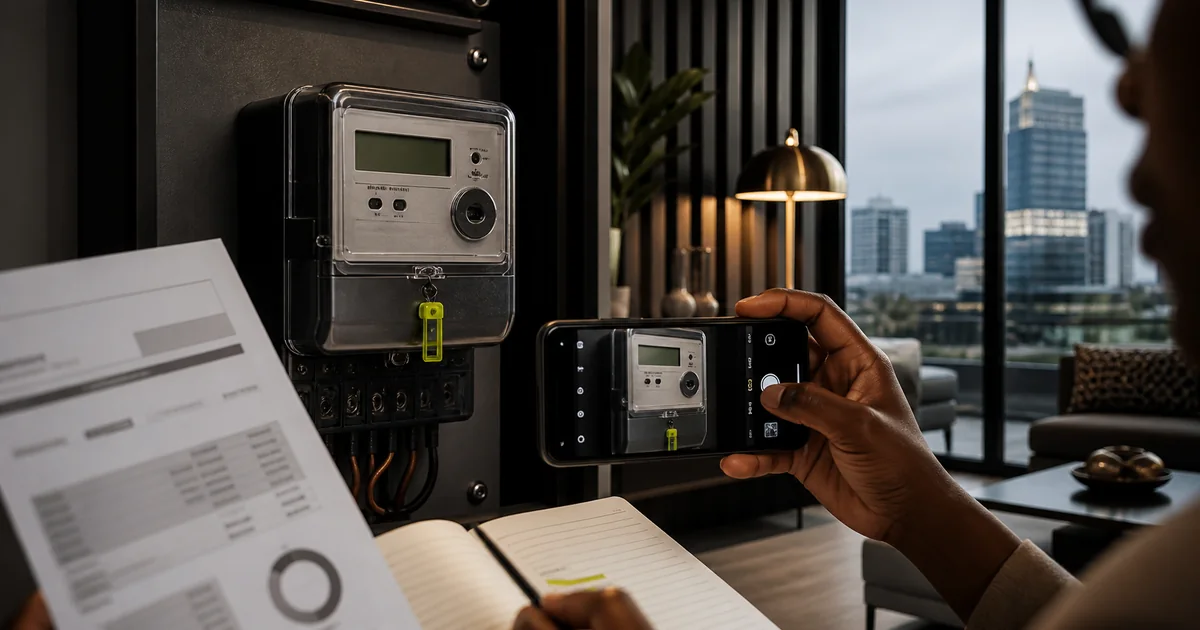
Photograph the meter display and meter number together if this can be done safely. Record the date and time and keep the original image. For a multi-meter property, confirm which meter serves the unit or building rather than choosing the nearest device.
Compare the visible reading with the latest account. A single photograph does not prove the entire history, but it can reveal a transposed number, wrong meter association or a reading that does not align with the account timeline.
- City of Johannesburg: how to submit meter readings — Official guidance for customers using the City’s meter-reading process.
03
Separate billing evidence from real consumption
If the bill reading matches the physical meter, investigate what changed at the property. High consumption can be genuine even when no single appliance seems dramatic. Equipment that heats, cools, pumps or charges for long periods often matters more than small devices used briefly.
Build a simple load timetable. Note the power rating where visible, the approximate hours of use and whether timers or controls are working. For commercial and managed properties, compare operating hours, tenant changes and common-area equipment against the same period last year.
- Geysers, underfloor heating, space heaters and heat pumps.
- Pool pumps, boreholes, irrigation and water-pressure systems.
- Air conditioning, refrigeration and extended business hours.
- New tenants, additional occupants or a vacant property becoming occupied.
- Inverter charging losses, battery settings, solar faults or generator auxiliaries.
04
When an electrician can add value
An electrician can investigate private-side faults, test circuits and help identify unusual loads or defective equipment. The useful scope should be agreed in advance: for example, checking a suspected circuit, assessing distribution-board conditions or measuring selected loads under controlled conditions.
An electrician cannot rewrite a municipal account, guarantee a billing adjustment or tamper with utility metering. Keep the technical findings separate from the formal account dispute and submit both through the correct channels.
- Electrical fault finding — Property-side investigation when a technical fault is suspected.
- Residential electrician services — Electrical support for Sandton homes and residential properties.
- Electrician in Sandton — Local Wesslink service information.
05
Submit one organised dispute pack
A clear dispute gives the account team a specific issue to investigate. State what appears wrong, which billing period is affected and what outcome you are requesting, then attach the supporting records in date order.
Keep the query reference number, submission date and every response. If additional information is requested, add it to the same timeline rather than starting unrelated queries through several channels.
- Disputed bill and at least three earlier bills.
- Dated photograph showing the meter number and reading.
- Short timeline of occupancy, equipment and operating-hour changes.
- Copies of submitted readings and previous query references.
- Electrician’s findings where a private technical problem was investigated.
- City of Johannesburg statements and accounts — Official City account information.
- City of Johannesburg accounts FAQ — Official account-query guidance.
- Identify City Power or Eskom in Sandton — Confirm the supplier before lodging the query.
FAQ
Questions readers also ask
Why is my Sandton electricity bill suddenly so high?
Possible causes include estimated or adjusted readings, a longer billing period, increased use, new equipment, a defective appliance or a private electrical fault. Compare the bill dates, meter number and readings before choosing a cause.
What photo should I take for an electricity-bill dispute?
Where safe and permitted, take a clear dated photograph showing both the current meter reading and meter number. Keep the original file and do not open or interfere with the meter.
Can an electrician prove that a municipal bill is wrong?
An electrician can investigate the private installation and document technical findings, but the supplier decides account corrections. Billing evidence and electrical test results should be submitted separately and clearly.
Should I compare the bill amount or the electricity units?
Compare both, but start with the billing period, meter number, opening and closing readings, and whether the reading is actual or estimated. Rand totals can also include adjustments or different billing periods.
How should a body corporate investigate a high common-property bill?
Confirm the correct common-property meter, compare equivalent billing periods, record equipment schedules and recent changes, and arrange targeted electrical testing where the consumption pattern remains unexplained.