“How many units is R500 electricity?” sounds like a simple division. In Johannesburg, the result can change with the customer’s tariff category, the consumption block reached during that month, fixed monthly charges recovered through prepaid purchases, qualifying free-electricity allocations and other lawful deductions shown on the token.
The current City of Johannesburg tariff year runs from 1 July 2026 to 30 June 2027. The approved rates are stated excluding VAT, so a responsible calculation must add the current 15% VAT rate as well as any applicable surcharge, fixed charge or deduction. This guide shows the inputs without promising a universal number that may be wrong for your meter.
01
One electricity unit is one kilowatt-hour
Prepaid electricity “units” are kilowatt-hours, written as kWh. A 1 kW appliance running for one hour uses approximately 1 kWh. A 2 kW heater running for three hours uses approximately 6 kWh.
The number of kWh on a token depends on the amount allocated to energy divided by the applicable rand-per-kWh rate. The whole R500 is not always the energy amount if the purchase also recovers approved monthly charges or account deductions.
02
City Power uses tariff categories and consumption blocks
The City’s final 2026/27 budget lists Domestic Prepaid Low base-energy rates of R2.7237/kWh for 0–350 kWh, R3.3318/kWh from 350–500 kWh and R4.1306/kWh above 500 kWh. Those figures exclude VAT. The same schedule shows a separate Domestic Prepaid High structure with different energy rates and monthly service and capacity charges.
The budget also states that a 6 c/kWh network surcharge applies, while residential customers are exempt for the first 500 kWh per month. The exact category, cumulative monthly block and charges attached to the account must therefore be confirmed from the municipal record and actual token.
- The purchase amount shown on the receipt.
- The rand amount left for energy after charges and deductions.
- The meter’s residential prepaid tariff category.
- Units already purchased in the current tariff month and the block reached.
- The applicable base rate, network surcharge and 15% VAT.
- City of Johannesburg final 2026/27 budget book — Official electricity tariff schedule effective from 1 July 2026.
- City of Johannesburg tariff engagement notice — Official confirmation of the 2026/27 tariff period and increase.
- SARS current VAT rate — Official confirmation that the standard VAT rate is 15%.
03
Use an illustrative calculation—not a promise
For one clearly labelled example, assume the account is on Domestic Prepaid Low, the meter is still in the 0–350 kWh block, no charge or deduction is recovered from this purchase and the full R500 buys energy. The approved base rate is R2.7237/kWh excluding VAT. Including 15% VAT gives R3.132255/kWh, so R500 ÷ R3.132255 is approximately 159.63 kWh.
That 159.6 kWh result is not a universal Johannesburg answer. If the purchase crosses a block boundary, calculate the units that fit in the remaining lower block first, then apply the next rate to the remaining rand amount. If the receipt recovers monthly charges, debt or another lawful deduction, subtract that amount before dividing by the applicable energy rate.
- Energy amount: R500 − R0 charges or deductions = R500.
- VAT-inclusive rate: R2.7237 × 1.15 = R3.132255/kWh.
- Illustrative units: R500 ÷ R3.132255 = 159.63 kWh.
- Round only the displayed answer; keep the full rate in the calculation.
- Repeat with the actual tariff, block and deductions shown for the meter.
04
Read the token receipt line by line
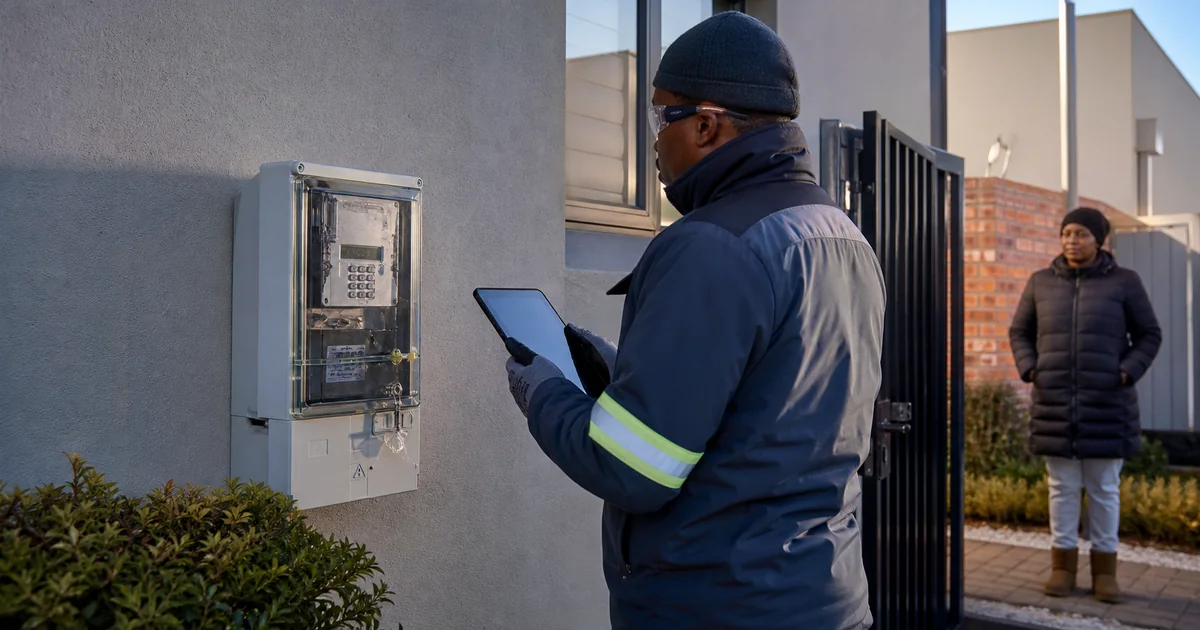
Keep the full receipt or digital token record. It should identify the meter, transaction, purchase value and units issued. Depending on the vending platform, it may also show fees, debt recovery, free allocations or tariff information.
If the units appear unexpectedly low, do not buy repeatedly just to test the meter. Compare the receipt with an earlier purchase, confirm the meter number and ask the supplier or vending support channel to explain each deduction.
- Meter number and municipal account number.
- Full token receipt and transaction reference.
- Purchase date, amount and kWh issued.
- Previous receipts from the same tariff month where available.
- Exact deduction or tariff line that needs explanation.
05
Manage the loads that materially affect the total
Small standby devices are easy to notice, but heating, cooling, pumping and charging loads usually deserve the first review. Record how long geysers, heaters, pool pumps, ovens, air conditioners and inverter chargers operate.
Wesslink can investigate unusual private-side consumption or faulty equipment, but cannot change the City’s tariff or remove municipal account charges. A technical assessment and a tariff query are separate processes.
- High electricity bill evidence guide — The same evidence method applies across Johannesburg accounts.
- Electrician in Roodepoort — Property-side electrical support.
- Electrical fault finding — Targeted investigation where abnormal consumption or a fault is suspected.
FAQ
Questions readers also ask
How many electricity units does R500 buy in Johannesburg in 2026?
There is no universal number. In one approved 2026/27 Domestic Prepaid Low first-block example, with no charges or deductions and 15% VAT included, R500 buys about 159.6 kWh. The tariff category, cumulative monthly block and receipt control the actual token.
Why did I receive fewer units for the same R500 later in the month?
The cumulative units purchased for the meter may have moved the transaction into a higher block, or the receipt may include charges or deductions. Compare the complete receipts and monthly purchases.
Does buying at the start of the month create cheaper electricity?
The important issue is the cumulative units purchased within the tariff month and the account’s tariff rules. Buying early does not create extra energy by itself, but it can place the purchase in an earlier block before higher thresholds are reached.
Can a prepaid token include charges other than energy?
Yes, depending on the account and approved tariff structure. Use the receipt to see what portion of the purchase was allocated to energy and what other lawful items were recovered.
Can an electrician change my City Power prepaid tariff?
No. Tariff category and municipal account charges are handled by the supplier. An electrician can investigate the private installation and unusual electrical consumption.