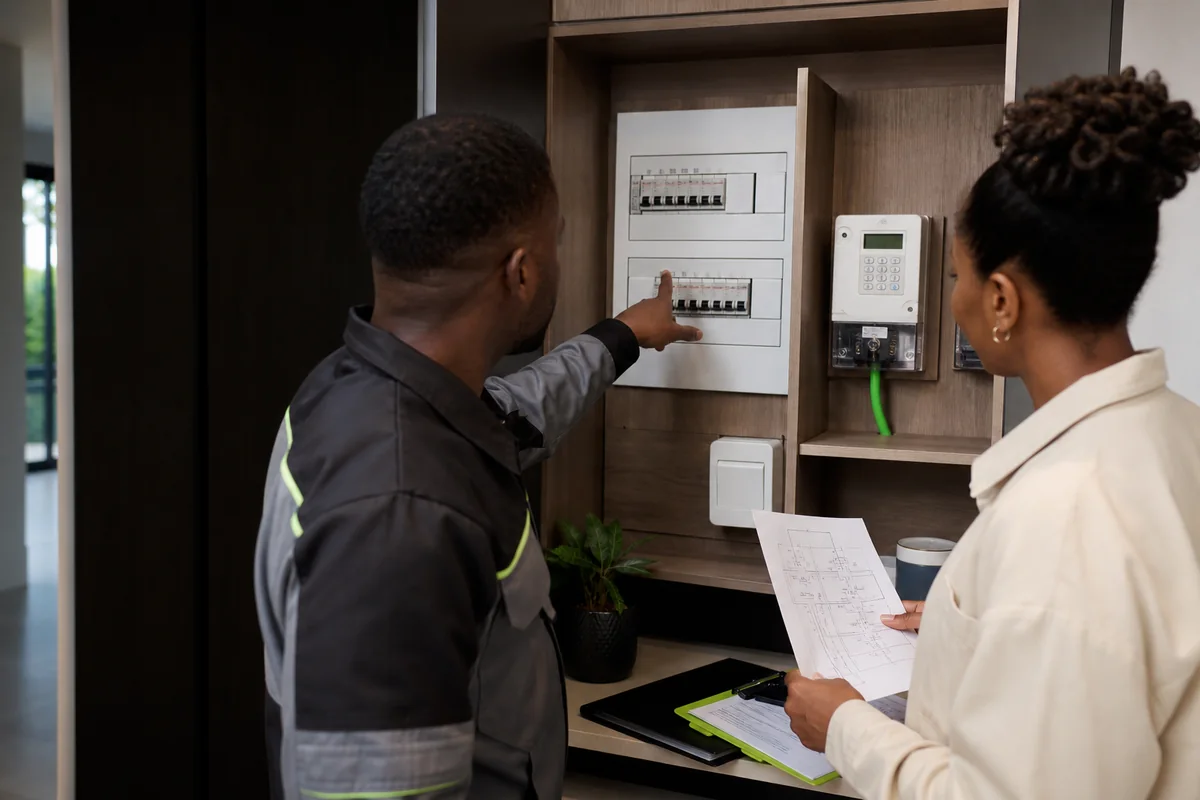

An “estate electrical inspection” may refer to one private home, a sectional-title unit, a clubhouse, gate infrastructure, common lighting or a complete shared distribution system. Those are different assignments and should not share one unexplained fee.
Midrand and Waterfall-area properties often combine controlled access with solar, inverters, generators, pumps, gates and several responsible parties. A useful quotation starts by identifying ownership and scope.
01
Identify the electrical asset owner first
Ask whether the installation belongs to the homeowner, body corporate, homeowners association, landlord or specialist system provider. The person authorising the work should have authority over that asset.
A COC for one private installation does not automatically certify the estate’s common infrastructure. The quotation should identify the property and portion concerned.
- Property managers and complexes — Support for common-property and portfolio electrical work.
- Electrical COC inspection and certification — Inspection, defect reporting and certification support.
- Electrician in Midrand — Midrand electrical service hub.
02
What changes the inspection or COC cost
The number of boards, buildings and fixed systems affects inspection and testing time. So do access appointments, induction, escorts, missing records and the need to coordinate with tenants or estate management.
Alternative-energy and security equipment may require specialist records or separate scopes. Do not assume every visible system is included in the same inspection fee.
- Private unit, house or common-property scope.
- Boards, outbuildings and fixed equipment included.
- Access and estate approval arrangements.
- Solar, inverter, generator, gate and fence interfaces.
- Defect quotation and final documentation process.
03
Use neutral wording for named estates and precincts
A contractor serving Waterfall City or another estate should not imply approval, appointment or affiliation unless that relationship is genuine and documented. Service-area wording simply explains where assistance is offered.
Property managers should confirm vendor requirements, induction and access before the date of inspection. This avoids wasted attendance and makes the quotation more accurate.
- Electrician in Waterfall — Waterfall and managed-property service context.
- Sectional-title maintenance plan — A framework for common electrical assets.
04
Compare inspection proposals on the same scope
Check whether each proposal includes attendance, testing, reporting, defect review, return work and certification. If the building remains occupied, ask how isolation and access will be managed.
The right comparison is not simply the lowest inspection fee. It is the clearest route to reliable evidence and a correctly defined compliance outcome.
05
Map electrical responsibility before an estate inspection
Estate and sectional-title work becomes clearer when the unit, common-property and utility boundaries are agreed before testing. This prevents duplicated quotes and gaps between the owner, body corporate, managing agent and service provider.
- Identify the supply point and which party controls the main switchgear and metering.
- Separate unit-owned circuits from common lighting, gates, pumps, fences and shared plant.
- Confirm who authorises isolations, access, shutdowns and remedial expenditure.
- Record solar, inverter, generator and shared backup systems, including their operating boundaries.
- Agree who receives the findings, quotation, test evidence and certificate where applicable.
Put the agreed boundary into the inspection brief. The contractor can then state clearly what was tested, what was excluded and who must address each finding.
FAQ
Questions readers also ask
How much does an estate electrical inspection cost in Midrand?
Cost depends on whether the scope covers one private installation or shared assets, the number of boards and buildings, access, testing time and any remedial work.
Is a Waterfall property COC different from other COCs?
The applicable electrical process still depends on the installation, but estate access, ownership boundaries and additional energy systems may change the practical scope.
Can a body corporate request one COC for every unit?
The installation or portion covered must be clearly identified. Private units and common property may require separate records or scopes.
Should gate, electric-fence and inverter systems be disclosed?
Yes. Identify them and provide available records so their interfaces and responsibility can be considered appropriately.