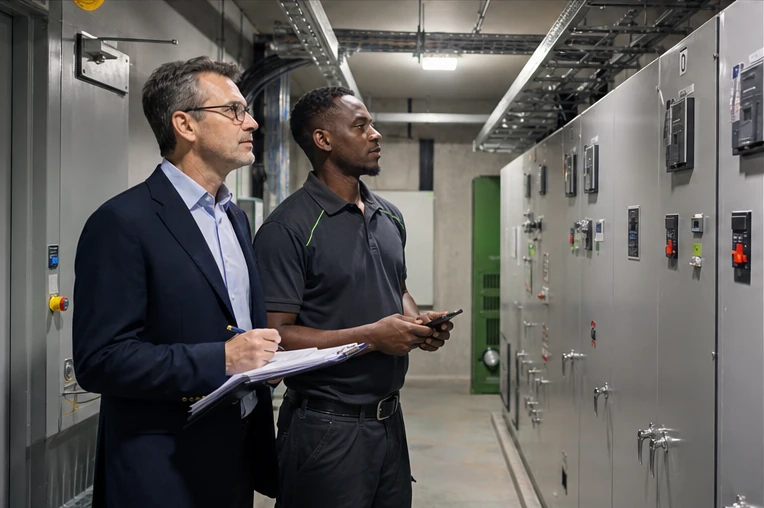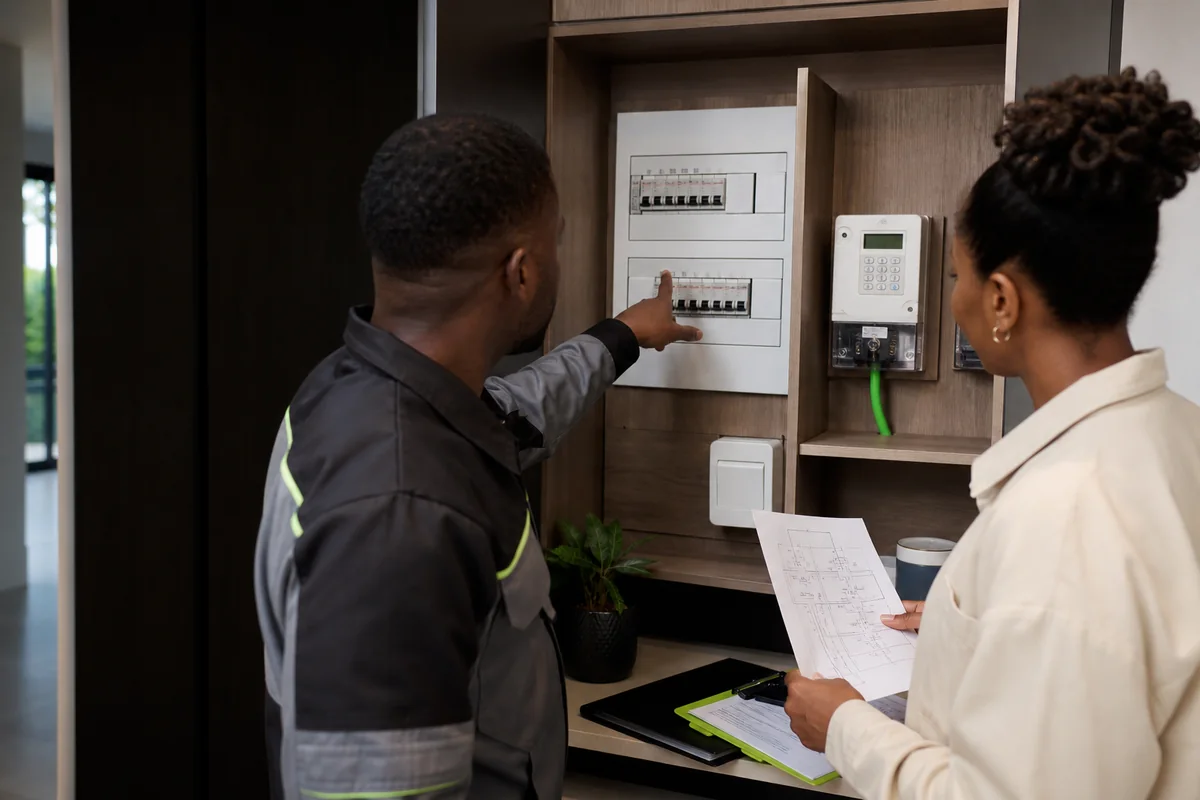
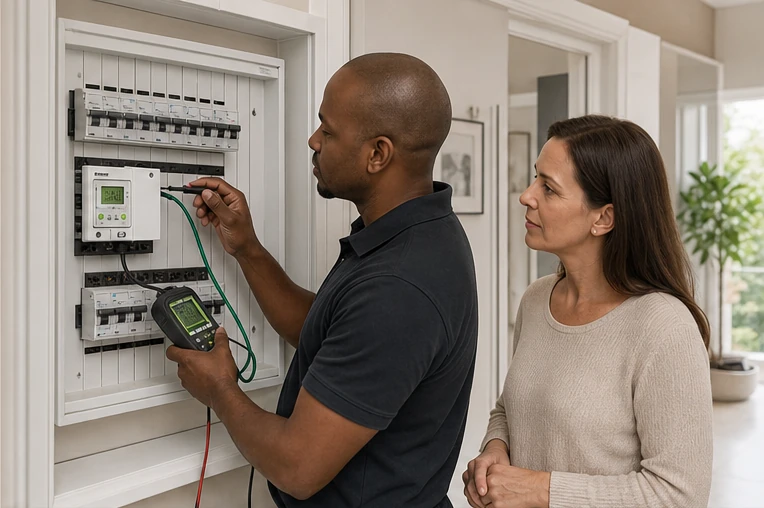
The price of a geyser timer is not the same as the cost of a safe installation. The existing board may already have suitable space and control equipment, or the installation may need an enclosure, contactor, protection correction or investigation of a tripping circuit.
A useful quote explains the switching method and confirms that the timer is appropriate for the connected load. It should not treat repeated breaker or earth-leakage trips as a scheduling problem.
01
What determines the installation cost
The timer type, mounting method, distribution-board space and existing circuit condition affect the work. Some arrangements use the timer to control a suitably rated contactor rather than switching the full geyser load directly.
The electrician should verify the actual configuration instead of assuming it from a photograph of the board exterior.
- Timer and suitable control equipment.
- Enclosure or distribution-board changes.
- Circuit identification and safe isolation.
- Connections, labelling and programming.
- Inspection and functional testing.
02
Do not install a timer to hide an electrical fault
If the geyser circuit trips, smells hot or has damaged equipment, first investigate the circuit, isolator, element, thermostat, connections and protection as appropriate. A timer does not repair insulation failure, loose terminals or an overloaded connection.
Tell the electrician about all symptoms before accepting a simple installation quote.
- Electrical fault finding — Diagnosis before component replacement.
- Distribution-board warning signs — When board symptoms require assessment.
03
What a timer can and cannot do for energy use
A timer changes when the geyser heats; it does not change the energy required to replace heat lost or hot water used. Savings depend on the household’s usage, thermostat setting, insulation and schedule.
Set realistic expectations and retain safe hot-water management. Electrical work should not be presented as a guaranteed percentage saving without property-specific evidence.
04
How to request an accurate Midrand quote
Provide the suburb, board location, geyser rating if known, current control method and whether the circuit has tripped. Mention solar water heating, heat pumps or backup power because those systems can change the operating arrangement.
Photographs of the closed board and existing isolator can help with planning, but the final installation decision remains site-specific.
- Electrician in Midrand — Midrand household electrical support.
- Contact Wesslink — Request a scoped timer or geyser-circuit assessment.
05
Complete a timer-suitability check before requesting installation
A timer is a control device, not a repair for tripping, overheating or water-heating defects. Establish the condition and purpose of the circuit first so the quotation addresses the real need.
- State the goal: scheduling, tariff management, tenant control or automation integration.
- Report tripping, hot connections, damaged isolators, leaks or inconsistent heating before installation.
- Confirm the geyser circuit, protection, isolator and existing control arrangement can be inspected.
- Choose the required schedule, manual override behaviour and response after a power interruption.
- Ask for commissioning checks, operating instructions and clear identification at the board.
If the circuit or equipment shows a fault, diagnosis and correction should come before adding the timer.
FAQ
Questions readers also ask
How much does a geyser timer cost to install in Midrand?
The price depends on the timer, control method, board space, circuit condition, enclosure needs and testing. Request a quotation that separates equipment and labour.
Can any timer switch a geyser directly?
No assumption should be made. The device and switching arrangement must suit the actual load and installation.
Will a timer stop my geyser breaker from tripping?
No. Tripping requires fault diagnosis. A timer should not be used to conceal a circuit, element, connection or protection problem.
Can I put the geyser on the inverter?
That decision depends on the inverter, battery, essential-load design and installation. It should be assessed rather than assumed.