
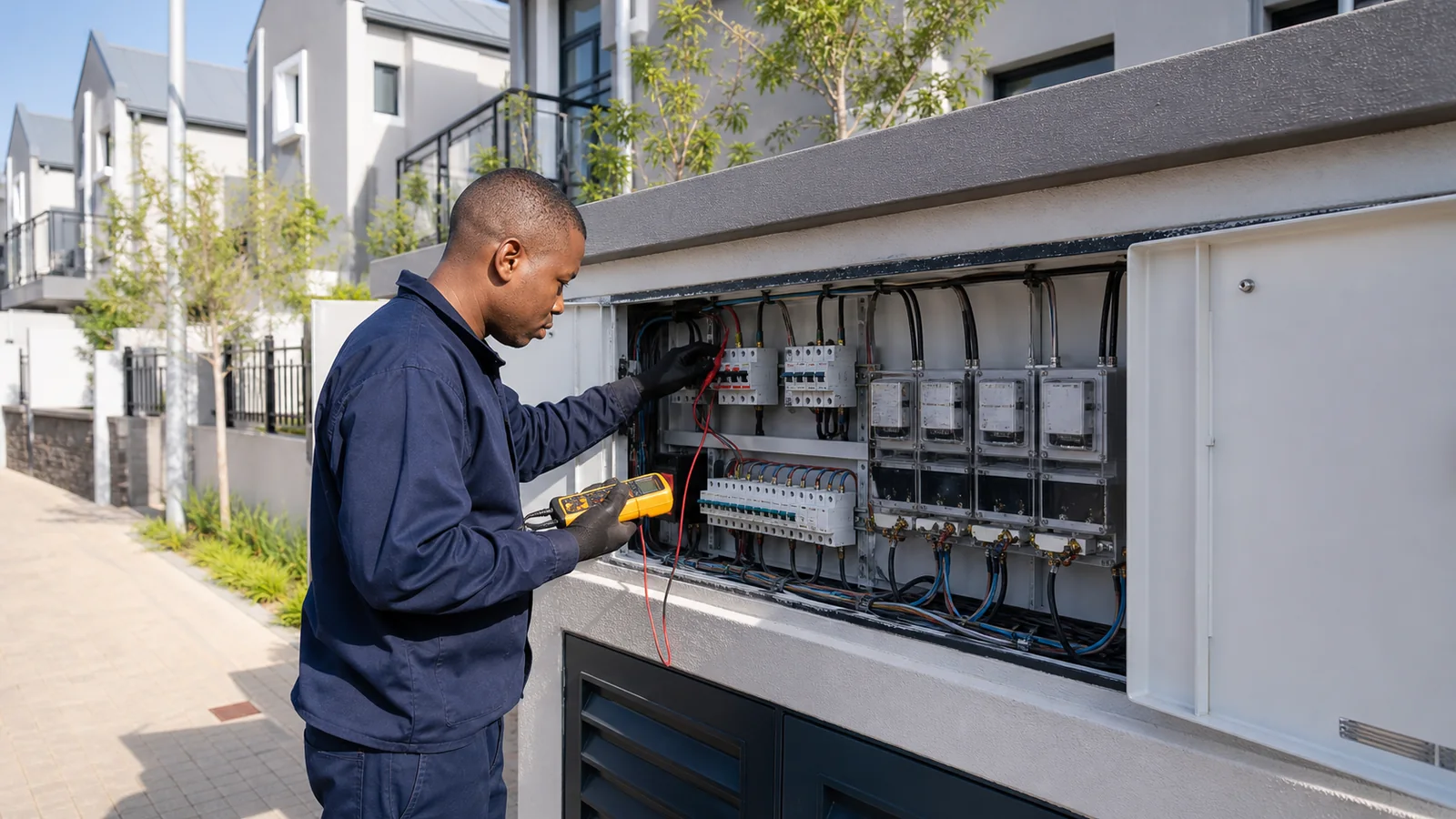
For a Sunninghill complex, record the actual supply state of affected units so a working backup circuit is not mistaken for evidence that normal supply is available everywhere.
Distinguish observed power from supply state
Note whether the affected property was operating on normal or backup power when the symptom appeared, if that is known. Record common-area observations separately. A neighbouring light remaining on may reflect a different arrangement, so avoid using it alone to decide the fault boundary.
- Known normal or backup supply state
- Separate unit and common-area observations
- Access and existing installation records
Share existing system information
Provide accessible equipment details, previous handover records and any management report. Do not change system settings or operate unfamiliar changeover controls to compare units. Tell the booking team about later electrical additions and any uncertainty in the records.
Coordinate assessment and reporting
Arrange the relevant unit and shared-area access through the authorised contacts. Ask the electrician to describe which supply conditions and areas were assessed. Record any limitation and further action so a test performed under one condition is not presented as verification of every operating state.
Useful questions
Questions property owners ask next.
Does a neighbour having lights prove normal supply is available in Sunninghill?+
No. Different units may have different supply or backup arrangements. Record what is known and let the assessment establish the relevant electrical condition rather than drawing a conclusion from one light.
The next useful step