Assess
Confirm the incoming supply, existing boards, equipment, intended loads and the electrical boundary before selecting work.
Solar and backup-power electrical integration
Solar electrician assessment, diagnostics, corrective electrical work and compliance support in Sandton, subject to the equipment, site, authority, distributor, scope and current availability.
Sandton work can involve homes, offices, retail premises and managed buildings. The electrical brief must separate essential-load continuity from equipment supply, building rules and any utility or property-management process.
Electrical scope first
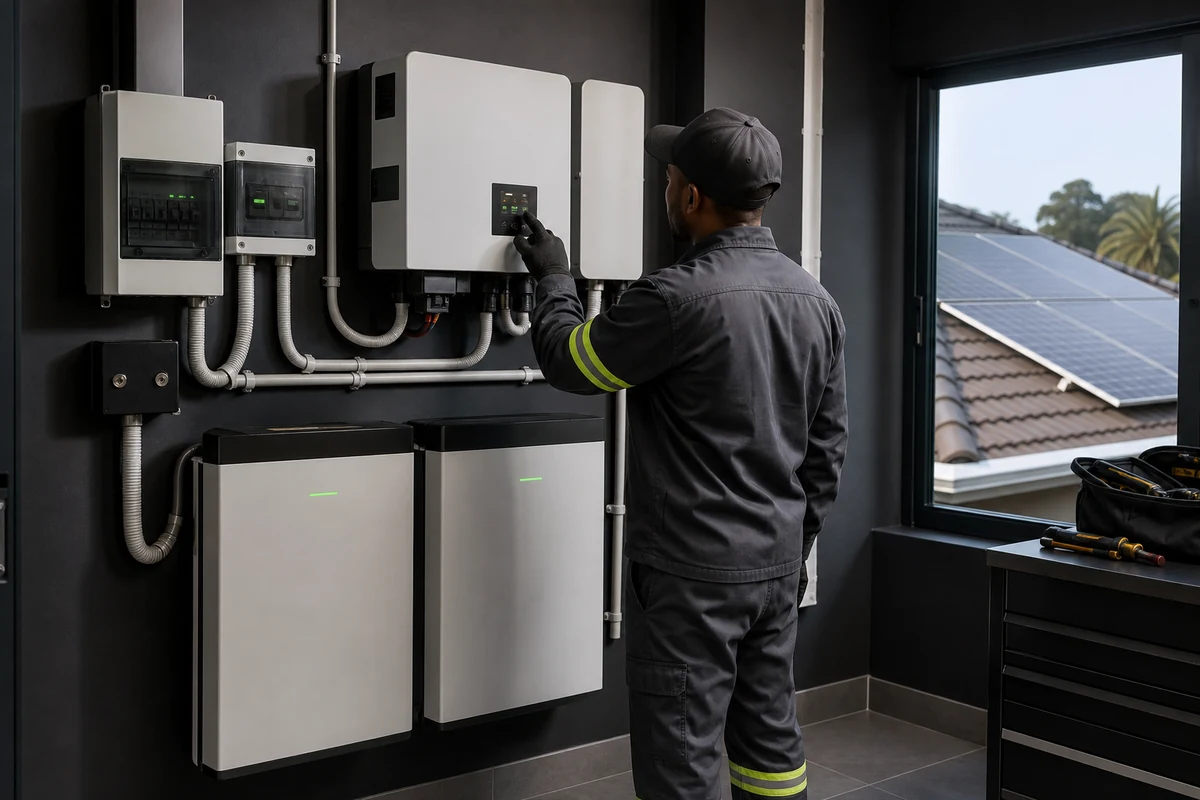
Wesslink’s Solar Electrical Services scope focuses on electrical assessment, integration, protection, isolation, changeover, fault finding and remedial work around solar and backup-power equipment. The equipment, supply, distribution boards and essential loads must be understood together.
Confirm the incoming supply, existing boards, equipment, intended loads and the electrical boundary before selecting work.
Review protection, isolation, earthing, labelling, essential-load distribution and changeover behaviour.
Compare grid, backup and changeover symptoms and test the relevant electrical circuits before confirming a cause.
Separate completed electrical work, test findings, operating limits and remaining specialist or registration responsibilities.
Clear ownership
Solar Panels Installation, equipment selection and electrical integration can overlap, but they are not automatically the same appointment.
Fixed-installation assessment, supply and board interfaces, protection, isolation, earthing, labelling, changeover, fault finding, authorised remedial work and test records.
Panel supply, roof mounting and generation design are separate scopes. Product selection, structural work, utility approval, savings, output, warranty and registration outcomes are not promised on this page.
Existing-system support
A solar electrician can assess documented symptoms, AC and DC isolation and protection within the authorised scope, distribution-board, essential-load and changeover interfaces, labelling, test records, corrective electrical work and the implications of a proposed alteration.
Provide the exact address and distributor, property authority, when the symptom began, alarms or error codes, affected loads, equipment make and model, modules, inverter, batteries, generator, protection, verified supply type, configuration, warranty history, SSEG or COC records and safe photos without opening equipment.
An error code or photo is not a final diagnosis. A fault may require the manufacturer or warranty channel, a product specialist, structural or roofing input, distributor action or further design work. Do not open equipment, manipulate connectors, reset tamper protection, bypass protection or attempt live AC or DC testing.
Sandton property context
The exact property type matters in Sandton. A freestanding home, sectional-title unit and commercial tenancy can have different access, common-supply, metering and approval boundaries even when the backup-power objective sounds similar.
Confirm landlord, facilities, estate or body-corporate authority before planning work in shared electrical rooms or common areas.
List genuinely essential equipment and operating limits so the electrical assessment is tied to a defined load brief.
Provide inverter, battery, solar-controller and protection details plus previous reports, alarms and alteration records where available.
Keep tenant or unit circuits separate from lifts, pumps, security and other common services unless the responsible parties expressly include them.
Local discovery
Use the regional hub and relevant local pages below, then confirm the distributor or account context, current coverage, access, scope and availability for the property.
Useful preparation
Send the exact address, distributor or electricity-account context, supply type, equipment list, intended essential loads, grid-tied or off-grid arrangement if known, existing certificates and reports, symptoms and authorised access details.
Questions before work
Registration and electrical compliance are related but separate responsibilities. Requirements can depend on the actual distributor, connection type and system arrangement.
The agreed scope can include electrical assessment, distribution and essential-load interfaces, protection, isolation, earthing, labelling, changeover behaviour, fault finding and remedial work. The installation and test findings determine what is required.
Not necessarily. This page covers the electrical interface and verified electrical work. Panel supply, roof mounting and generation design are separate scopes that must be confirmed with the responsible provider.
Yes, subject to the confirmed address, access, scope and availability. Record whether the symptom occurs on grid supply, backup supply or during changeover, and provide equipment details and available documents. Testing is required before the cause or repair is confirmed.
No. Registration and electrical compliance are related but separate responsibilities. The actual distributor, connection type, system arrangement and current requirements must be confirmed before a process is stated.
Send the exact address, electricity distributor or account context, supply type, installed equipment, intended essential loads, grid-tied or off-grid arrangement if known, available certificates and reports, symptoms and authorised access details.
Property-specific next step