Production impact
Critical equipment and acceptable downtime should be agreed before isolation.
Industrial sites · manufacturing · three-phase power
Industrial and commercial electrical support in Clayville.
Wesslink assists Clayville factories, workshops, warehouses and commercial sites with electrical fault finding, repairs, maintenance and compliance-related inspections.
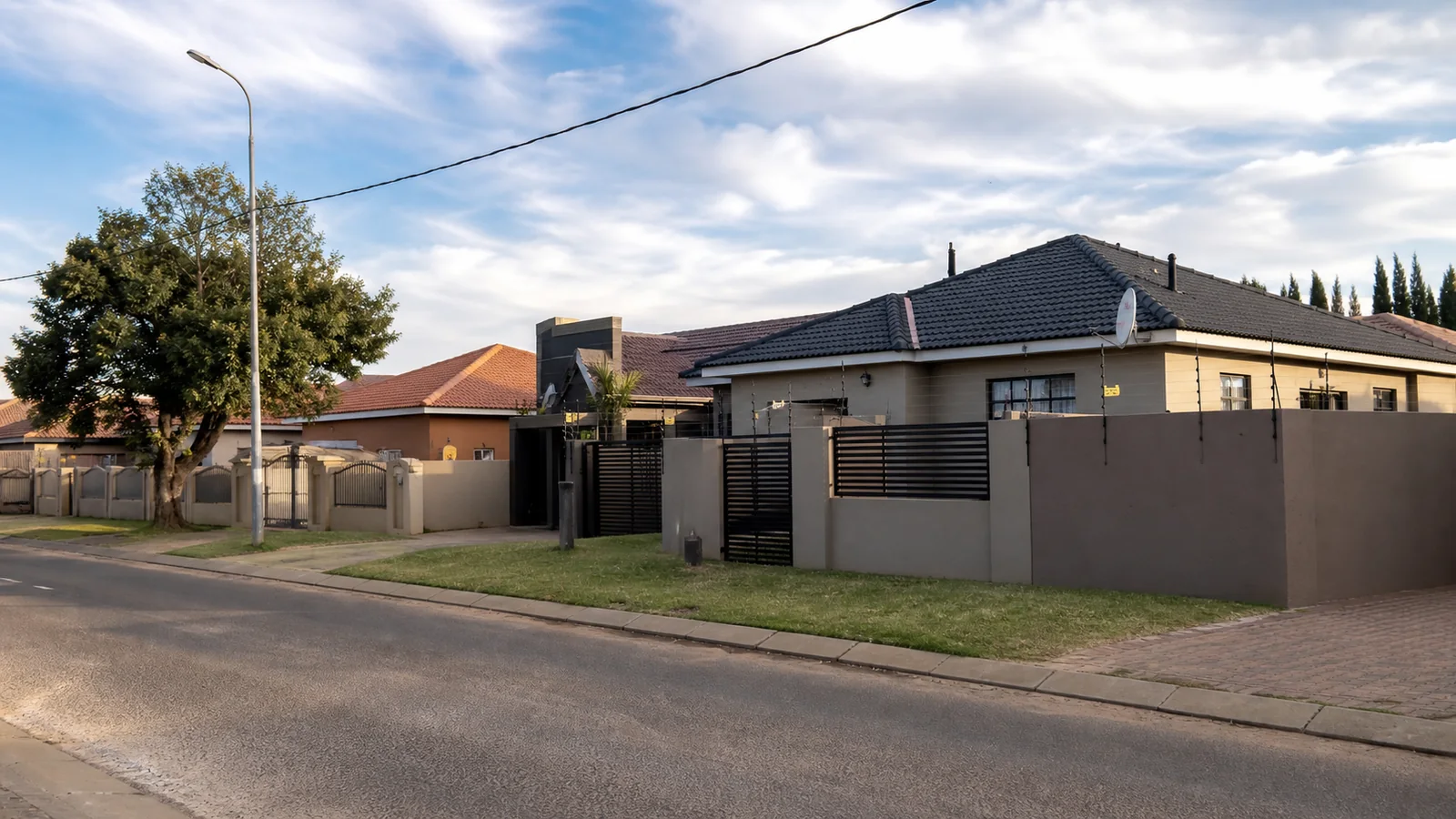
Clayville property context
Industrial fault finding requires safe access, authorised isolation and an understanding of production-critical equipment. A tripping circuit may involve distribution, protection, controls, cabling or the connected machine, so the evidence must be separated methodically.
Critical equipment and acceptable downtime should be agreed before isolation.
Protection trips may reflect supply, control or equipment conditions that require distinct testing.
Responsible persons, permits and lockout procedures must be established for the work area.
Electrical COC pathway
If you are searching for an electrical certificate of compliance in Clayville, the useful starting point is the installation—not the document alone. Inspection and testing establish whether remedial work is required before certification.
The accessible electrical installation is inspected and tested against the applicable requirements. The scope can include distribution boards, circuits, earthing, protection, fixed points and relevant additions.
If non-compliant or unsafe items are identified, the findings define the corrective work. Certification follows only after the relevant work and retesting have been completed successfully.
Homes, businesses, sectional-title properties, estates and managed buildings have different access and approval routes. Early coordination with owners, tenants, landlords, trustees or managing agents reduces avoidable delays.
Industrial fault finding requires safe access, authorised isolation and an understanding of production-critical equipment. A tripping circuit may involve distribution, protection, controls, cabling or the connected machine, so the evidence must be separated methodically. This local context helps frame the inspection, but the condition and history of the individual installation determine the actual scope.
Property size, the number of boards and circuits, access, installation records and additions such as pools, gates, outbuildings or backup power can affect the inspection scope. Any remedial work and return testing should be described separately from the initial inspection.
Review electrical COC cost factors ↗Use the right search pathway
Share the property type, intended deadline, alteration history and access constraints. Wesslink can then establish an appropriate starting point for inspection, remedial work or broader electrical assistance.
Electrical services in Clayville
Compliance and property transfer
02 ↗Perimeter-system compliance
03 ↗Diagnosis before replacement
04 ↗Protection, control and distribution
05 ↗Homes and residential property
06 ↗Business continuity and property operations
07 ↗Portfolio-ready electrical support
Before requesting assistance
Nominate the authorised site and safety contacts.
Provide equipment details, board references and the sequence leading to the trip.
Confirm the isolation window and any production-critical loads.
Clayville electrical FAQs
Yes. The distribution, protection, load conditions and connected equipment are assessed from the site evidence.
Yes. Site access, safety requirements, operating constraints and the affected equipment should be described first.
Availability depends on the current schedule, site requirements and fault scope; provide the full details so urgency can be assessed accurately.
Property size, the number of boards and circuits, access, installation records and later additions can affect the inspection scope. Any remedial work and return testing should be itemised separately. Certification follows only after the applicable inspection, testing and required corrections are completed successfully.
Begin with an inspection and testing appointment for the relevant installation. Provide the property type, access arrangements, certificate history and any known alterations. If defects are identified, the remedial scope and retesting must be completed before certification can be considered.
No. An electrical certificate of compliance is the outcome of a compliant installation and the required inspection and testing. Relevant defects must be corrected before the certification process can be completed.
Arrange access to the distribution boards, rooms, garages, outbuildings and other relevant parts of the installation. Locate previous certificates or alteration records where available, and explain whether a landlord, tenant, body corporate, estate or managing agent controls access.
An older certificate may not cover electrical work completed after it was issued. Tell the electrician about renovations, extensions, added circuits, backup-power equipment and other changes so the current scope can be established properly.
No. They relate to different installations and compliance processes. A property may require both, but one certificate does not automatically include the other.
Continue around Midrand