Whole-property distribution
Secondary boards, cottages and long external circuits should be mapped before recurring symptoms are treated independently.
Large homes · discreet service · integrated systems
Discreet electrical care for complex Inanda properties.
Wesslink assists Inanda homeowners and property professionals with discreet electrical fault finding, repairs, COC inspections, maintenance and planned improvements.
Inanda property context
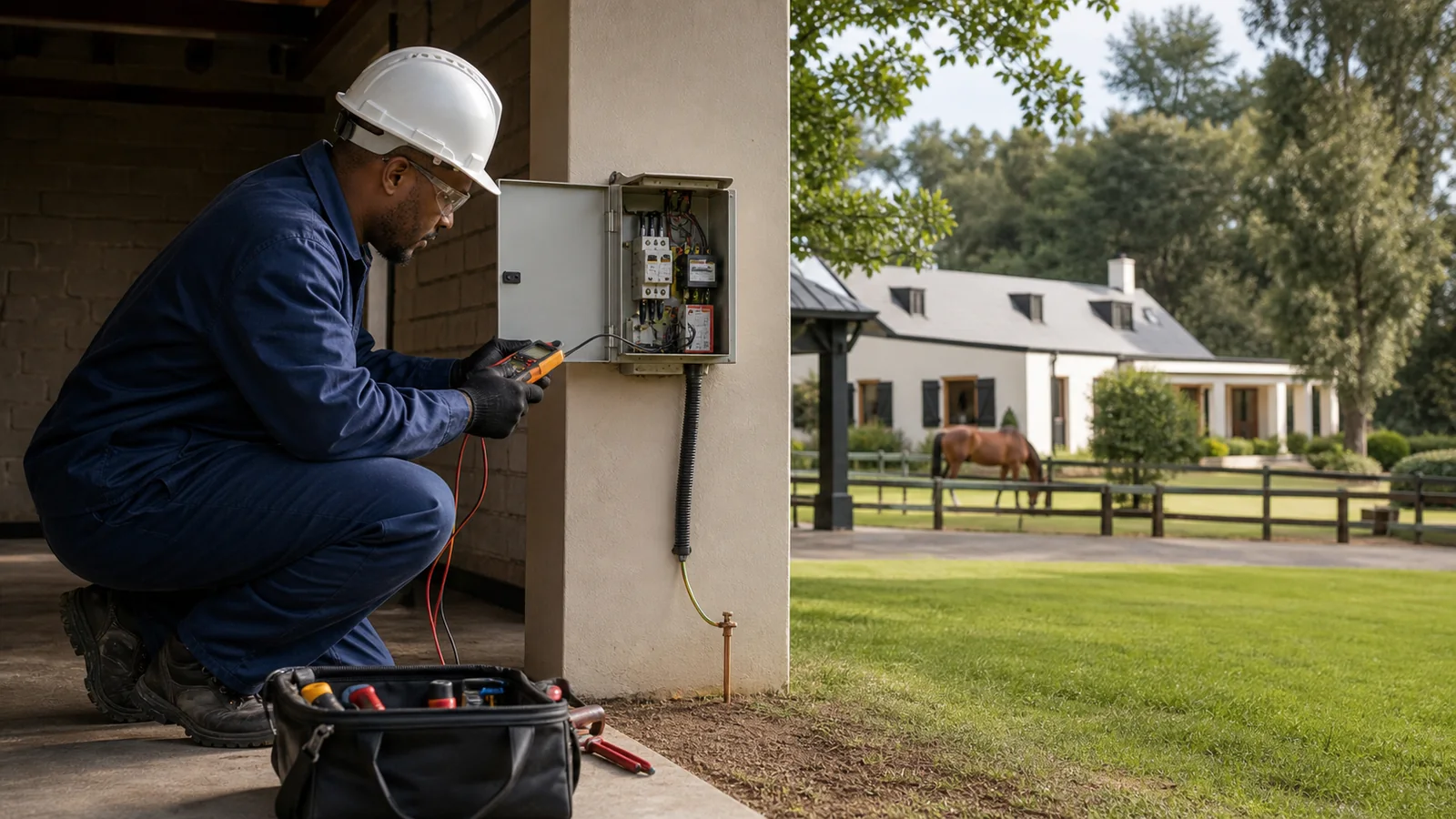
Inanda properties can include several distribution boards, staff accommodation, pumps, gates, security, automation and backup-energy equipment. The useful starting point is a complete property scope that respects privacy while identifying every connected system and the contractors responsible for specialist equipment.
Secondary boards, cottages and long external circuits should be mapped before recurring symptoms are treated independently.
Security, automation, gates and backup power can influence isolation and fault behaviour without forming the same technical scope.
The authorised contact, security process, permitted work areas and isolation window should be agreed before attendance.
Electrical COC pathway
If you are searching for an electrical certificate of compliance in Inanda, the useful starting point is the installation—not the document alone. Inspection and testing establish whether remedial work is required before certification.
The accessible electrical installation is inspected and tested against the applicable requirements. The scope can include distribution boards, circuits, earthing, protection, fixed points and relevant additions.
If non-compliant or unsafe items are identified, the findings define the corrective work. Certification follows only after the relevant work and retesting have been completed successfully.
Homes, businesses, sectional-title properties, estates and managed buildings have different access and approval routes. Early coordination with owners, tenants, landlords, trustees or managing agents reduces avoidable delays.
Inanda properties can include several distribution boards, staff accommodation, pumps, gates, security, automation and backup-energy equipment. The useful starting point is a complete property scope that respects privacy while identifying every connected system and the contractors responsible for specialist equipment. This local context helps frame the inspection, but the condition and history of the individual installation determine the actual scope.
Property size, the number of boards and circuits, access, installation records and additions such as pools, gates, outbuildings or backup power can affect the inspection scope. Any remedial work and return testing should be described separately from the initial inspection.
Review electrical COC cost factors ↗Use the right search pathway
Share the property type, intended deadline, alteration history and access constraints. Wesslink can then establish an appropriate starting point for inspection, remedial work or broader electrical assistance.
Inanda electrical guide
Inanda enquiries should begin with the exact property type, affected area and operating pattern. For larger homes, estates, security systems and secondary structures, that means recording which boards, units, structures or business functions are involved. Main boards, sub-boards, long feeders and alternative supplies must be understood as one coordinated installation. This evidence helps direct testing and avoids replacing parts before the fault boundary is known.
The priority in Inanda is long feeders, outdoor circuits and multiple supply points. Report recent electrical work, weather exposure, equipment changes, unusual heat, odour, noise, tripping or partial power. Identify all supplied structures, essential systems and site-access requirements before planned isolation or testing. Safe measurements should then confirm whether the concern lies in the incoming supply, distribution, a final circuit, a connection or the connected equipment.
Cottages, pools, gates, solar, inverter and air-conditioning circuits should be disclosed when the installation is assessed. An electrical compliance certificate is considered only after the relevant fixed installation has been inspected, tested and found compliant. If defects or undocumented changes are identified, the remedial scope and retesting should follow the actual findings rather than a generic assumption.
Electrical services in Inanda
Compliance and property transfer
02 ↗Perimeter-system compliance
03 ↗Diagnosis before replacement
04 ↗Protection, control and distribution
05 ↗Homes and residential property
06 ↗Business continuity and property operations
07 ↗Portfolio-ready electrical support
Before requesting assistance
Provide the Inanda address, authorised contact and any access or privacy instructions.
List every occupied building, distribution board, pump, gate and essential circuit included in the scope.
Share recent alteration records and details of generators, inverters, solar or automation specialists.
Inanda electrical FAQs
Yes. The instruction should identify all buildings, boards, essential circuits and specialist systems that may affect the electrical scope.
Yes. Access, work areas, communication and isolation can be agreed with the authorised property representative beforehand.
Yes. The core installation and each system interface can be assessed within clear technical and specialist-responsibility boundaries.
Wesslink combines more than 20 years of electrical experience with property-specific testing, clear explanations, dedicated service guidance and published client reviews. The right choice still depends on the required scope, access and availability.
Yes. Inanda is connected to Wesslink's Sandton service hub for electrical fault finding, repairs, compliance inspections and planned electrical work, subject to the confirmed address, scope and availability.
Send the full Inanda address, property type, affected area, fault pattern or required outcome, access details and safe photographs where useful. This helps route the request to the correct service.
Use Wesslink's published price guides to understand common call-out, diagnostic and electrical COC cost factors. The actual scope remains property-specific and is confirmed from the installation and work required.
Property size, the number of boards and circuits, access, installation records and later additions can affect the inspection scope. Any remedial work and return testing should be itemised separately. Certification follows only after the applicable inspection, testing and required corrections are completed successfully.
Begin with an inspection and testing appointment for the relevant installation. Provide the property type, access arrangements, certificate history and any known alterations. If defects are identified, the remedial scope and retesting must be completed before certification can be considered.
No. An electrical certificate of compliance is the outcome of a compliant installation and the required inspection and testing. Relevant defects must be corrected before the certification process can be completed.
Arrange access to the distribution boards, rooms, garages, outbuildings and other relevant parts of the installation. Locate previous certificates or alteration records where available, and explain whether a landlord, tenant, body corporate, estate or managing agent controls access.
An older certificate may not cover electrical work completed after it was issued. Tell the electrician about renovations, extensions, added circuits, backup-power equipment and other changes so the current scope can be established properly.
No. They relate to different installations and compliance processes. A property may require both, but one certificate does not automatically include the other.
Continue around Sandton