Assign the installation boundary
Confirm which board, circuits and equipment belong to the landlord, common property or tenant, and who may authorise each part of the work.
Managed inverter installation · shopping centres
Plan inverter, compatible battery and essential-load integration around multiple supplies and boards, landlord, tenant and common essential-load responsibility, operational constraints and an authorised commissioning pathway.
For a shopping-centre enquiry, Wesslink first confirms the authorised stakeholder, relevant installation boundary, affected trading or common areas, essential loads and current site access before the system scope is agreed.
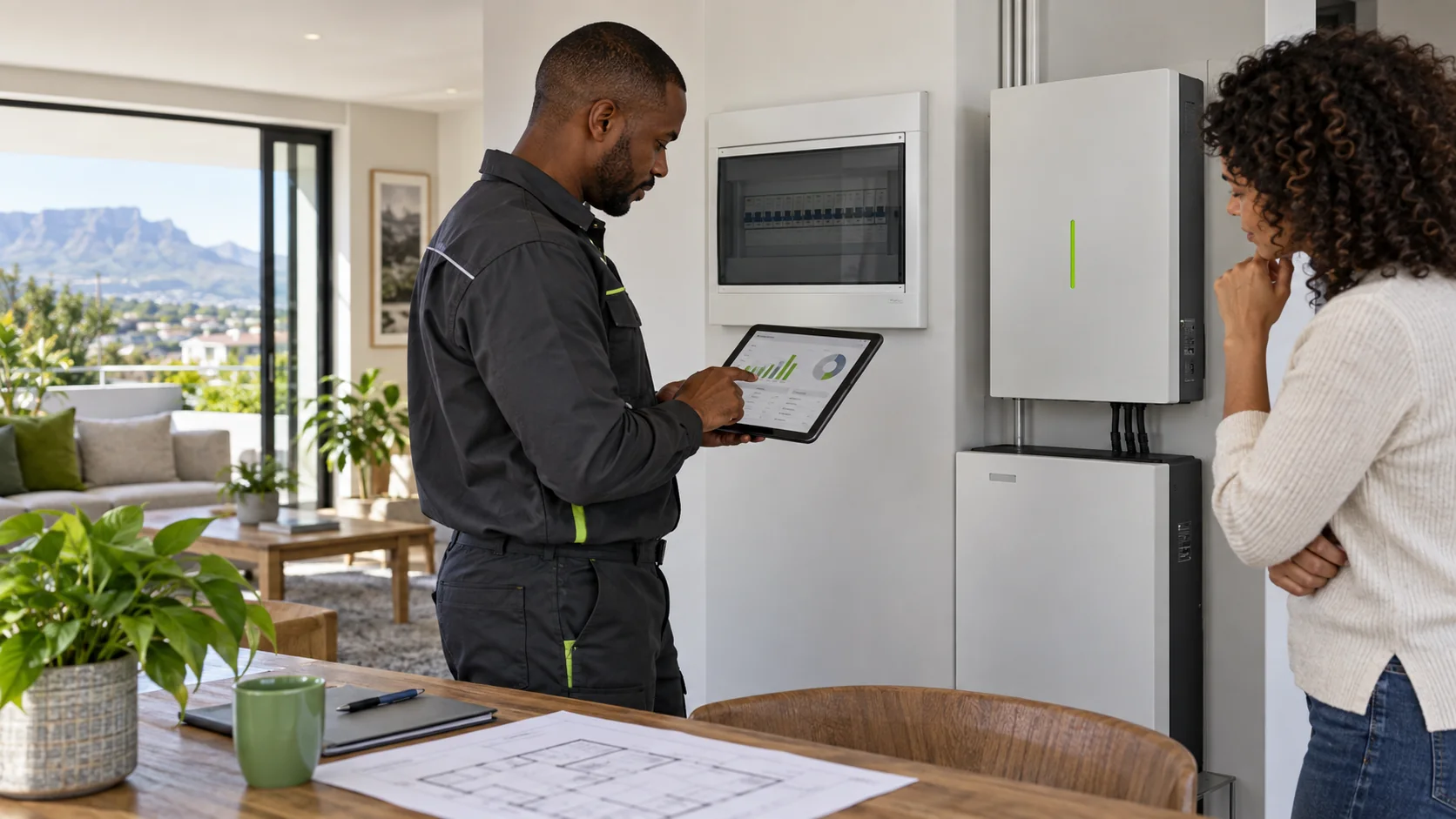
Property-specific design inputs
Shopping-centre inverter work may involve landlord, common-area and tenant boards; multiple supplies or meters; operational loads; and existing generator, PV or UPS interfaces. Each dependency must be verified without assuming compatibility, continuity or authority.
Confirm which board, circuits and equipment belong to the landlord, common property or tenant, and who may authorise each part of the work.
Document actual operating and starting loads, priorities, supply and phase arrangements, and any dependencies between tenant and common systems.
Coordinate facilities and security access, authorised isolation windows, affected occupants, staged testing, commissioning information and factual operating handover.
Assessment brief
Do not perform live AC or DC work, open equipment, alter connectors, bypass protection, create backfeed paths or attempt battery and inverter wiring. Safe exterior and closed-panel photographs may support preparation.

Essential-load integration
The system must be designed around actual operating and starting loads, the supply and phase arrangement, battery limits and the agreed outcome. A universal inverter size, battery capacity, cable size or backup duration is not responsible.
Related owners
This page owns inverter, compatible battery and essential-load integration. The broad solar electrical owner and accepted guides retain their separate roles.
Design and installation questions
Final design, equipment compatibility and authority steps depend on the selected system and actual property.
This page owns inverter, compatible battery and essential-load electrical integration. A new or expanded PV array, including modules, mounting and DC array work, remains a separate solar-panel installation task.
The relevant landlord, facilities representative or tenant may instruct work only within the installation and responsibility boundary they control. Board, supply and metering boundaries must be confirmed first.
The relevant boards, circuits, meters and dependencies are identified before the essential-load schedule is agreed. A generic tenant or common-area load list is not a responsible design basis.
Only after the actual equipment, controls, protection, earthing, operating sequence, manufacturer data and responsibility boundary have been assessed. Physical connection does not prove compatibility.
Location depends on authorised space, equipment instructions, ventilation, temperature, moisture, fire and impact risk, access, clearances, security and cable routes. No universal plant-room or back-of-house location can be assumed.
Continuity cannot be promised. Verified circuits, safe isolation requirements, shared dependencies and the authorised work sequence determine affected areas and whether the work can be staged.
Provide the authorised contact, board and metering information, essential-load priorities, equipment records, access requirements, shutdown windows, affected tenants and available COC or approval documents.
The confirmed scope determines appropriate electrical testing, configuration checks, circuit and isolation information, operating limits, records and responsible-person handover. It does not create a universal performance or runtime promise.
Not necessarily. Site assessment, equipment verification, approvals, ordered components, shutdown coordination, installation, testing and handover may require separate stages.
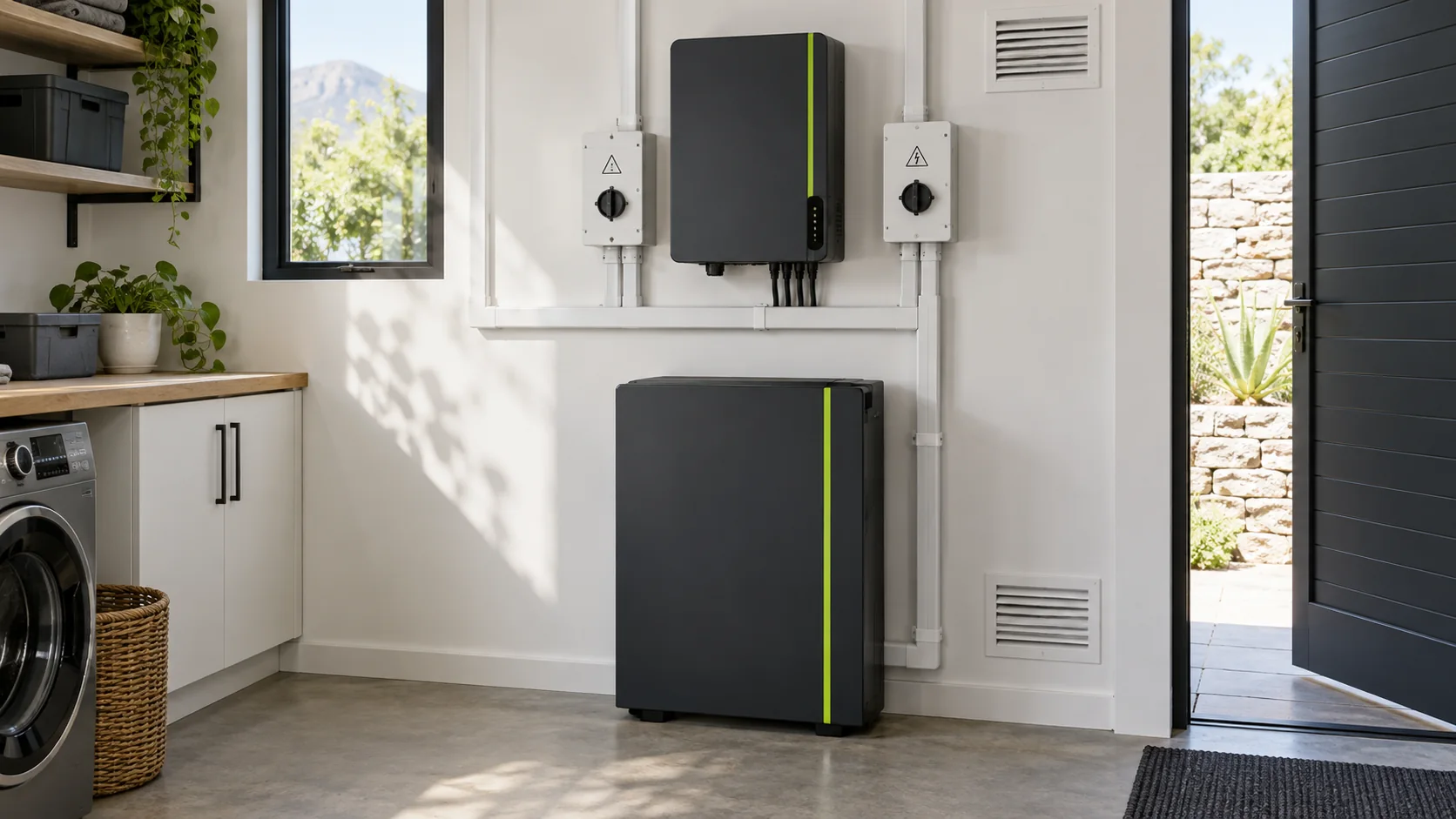
Illustrative installation concept
Equipment location and clearances follow current instructions for the chosen equipment and the site conditions. The image is an original illustrative concept, not a Wesslink project record or universal layout.
Verified scope first
Send the site, responsible parties, boards and supplies, essential loads, existing equipment interfaces, proposed location, access, shutdown requirements and available records.