
Authorised shopping-centre diagnosis
Shopping-centre electrical fault finding
Investigate an unknown electrical cause across tenant, landlord or common installations while facilities access, public exclusion, isolation and operating constraints remain explicit.
The cause is not yet established. This task is to narrow the fault boundary, record findings and recommend the next step. Repair remains separately scoped and authorised.
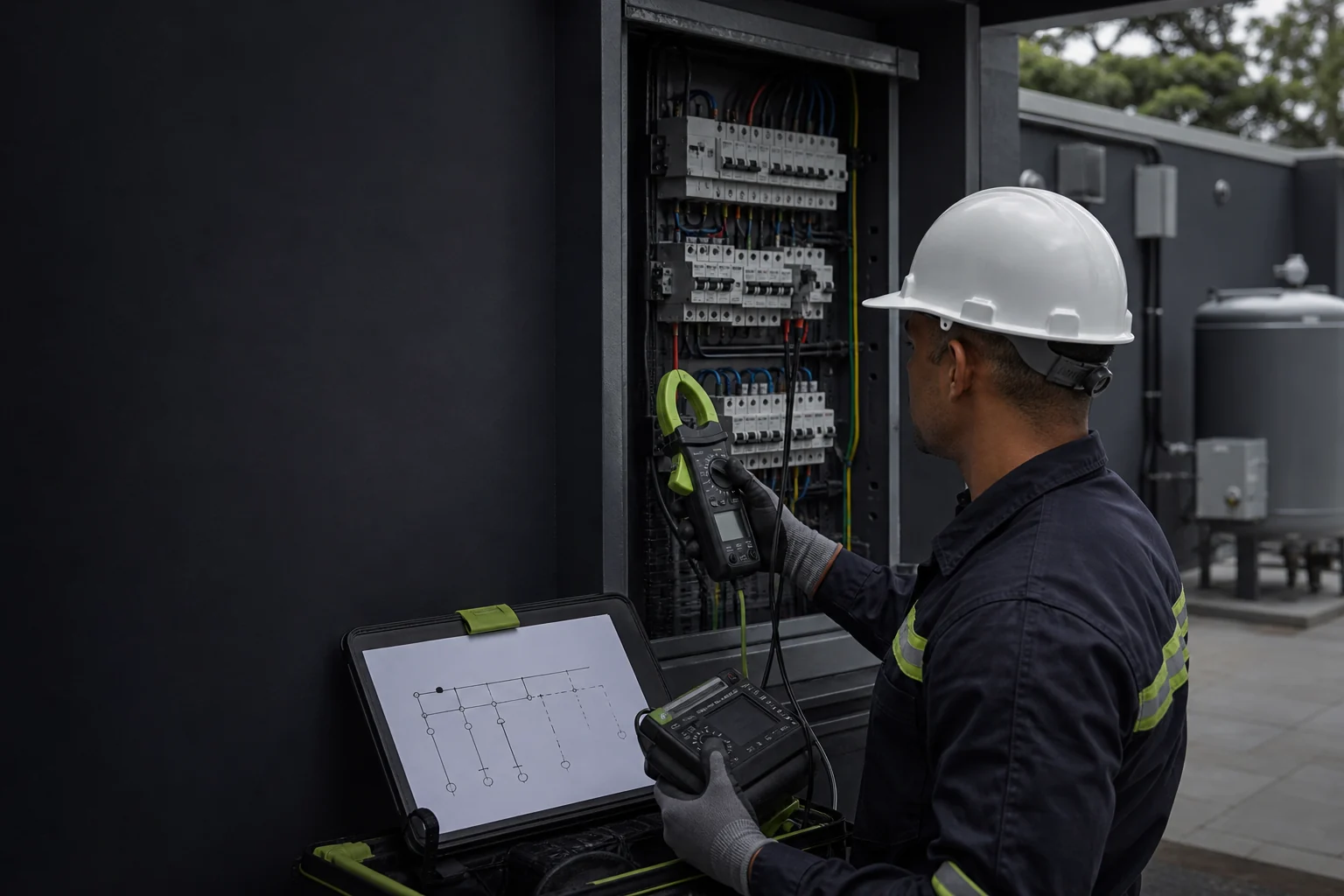
Immediate danger comes first.
For fire, smoke, shock, exposed conductors, arcing, unusual heat or immediate public or network danger, keep clear and use the relevant emergency or electricity-authority route. Do not touch equipment that may be energised.
Diagnostic sequence
Trace the cause without assuming the responsibility boundary.
The investigation follows the reported symptom through the authorised accessible installation, while trading areas, common services and tenant installations remain separated.
Capture the real symptom
Record what happened, where, when and under which load, weather or operating condition. Do not assign a cause from a label, keyword or photograph.
Establish the boundary
Separate public supply, shared distribution, private or tenant installation and connected equipment before responsibility is assigned.
Inspect, test and report
Inspect and test the authorised accessible installation, narrow the fault boundary, record findings and recommend the next step.
Shopping-centre coordination
Keep trading context, access and responsibility visible.
The task must identify the instructing party and the affected installation before technical conclusions or corrective scope are assigned.
Responsibility boundary
Confirm landlord, tenant and common-installation responsibility, the affected boards or circuits and who receives the findings.
Trading and public areas
Record affected trading and common areas, public exclusion needs, facilities and security access, and any controlled work zone.
Operating constraints
List operational and critical loads, permitted interruption, isolation authority, and tenant notification and testing windows.
Handover
Nominate the factual handover recipient for findings, test limitations, proposed correction and remaining matters.
Useful intake
Send facts that support safe planning.
Send only information that can be observed without opening or operating electrical equipment. Photographs do not establish the electrical cause.
- Exact centre name and address
- Authorised instructing party
- Affected tenant, board, circuit or common area
- Symptom, timing and operating pattern
- Supply status elsewhere in the centre
- Recent work, rain or load changes
- Facilities and security access arrangement
- Safe isolation authority and window
Safety and scope boundary
Reporting is safe; electrical intervention stays controlled.
Use safe closed-equipment photos only. Do not remove covers, do not perform live tests, do not repeatedly reset and do not bypass protection. Keep isolation under professional control, with the authorised property contact coordinating people and access.
Related owners
Move to the owner that matches the real task.
These links preserve the diagnostic, identified corrective-work, urgent and managed-property boundaries.
Questions before instruction
Managed-property fault and tripping FAQs.
Answers keep responsibility, authority, access, testing and outcomes explicit.
What is the difference between fault finding and repair in a shopping centre?
Fault finding starts where the cause is unknown and uses authorised inspection and testing to establish the affected boundary. Corrective work is proposed from the findings and requires its own scope and authority.
Who can authorise the investigation or corrective work?
The facilities contact, landlord representative or authorised tenant must confirm the instruction, responsibility boundary, access and isolation authority. Attendance does not transfer approval between private, tenant and common installations.
How are private, tenant and common electrical responsibilities separated?
Supply status, the affected board or circuit, metering, property records and the responsible party are checked before work is assigned. A symptom alone does not decide the landlord, tenant and common-installation boundary.
What information should be sent before attendance?
Send the exact address, instructing party, affected area, symptom or trip pattern, timing, recent work, rain or load pattern, supply elsewhere, relevant backup systems and safe closed-equipment photos.
Can an intermittent condition be investigated?
Yes, but timing, load, weather and operating records may be needed. If the condition is absent during attendance, staged observation or further testing may be recommended rather than an unsupported conclusion.
Should occupants keep resetting a protective device?
No. Do not repeatedly reset or bypass protection. A larger breaker or automatic replacement is not a substitute for identifying the condition and confirming an authorised repair.
How are access and isolation arranged?
Facilities, security and affected tenants coordinate authorised entry, public or resident exclusion, keys or permits, an isolation window and any operating constraints. Electrical isolation stays under professional control.
Does attendance mean the work will be completed immediately?
No. Completion depends on findings, responsibility, authority, safe access, isolation, parts where required, testing and the agreed scope. Unresolved or out-of-scope matters are recorded.
What is tested and handed over after the work?
Testing is limited to the affected authorised work and relevant operating condition. Findings, the completed scope, results, limitations and remaining recommendations are handed to the nominated facilities or landlord representative.
When should an ordinary service request use an emergency route instead?
If there is fire, smoke, electric shock, exposed conductors, arcing, unusual heat or an immediate public or network danger, keep clear and use the relevant emergency or electricity-authority route.
Ready to provide the facts?
Request an authorised fault-finding assessment
Provide the symptom pattern, affected trading or common area, responsibility, access and isolation details so the authorised investigation can be scoped.