
Diagnose, authorise, repair and verify
Tripping power diagnosis and repair
A structured repair route for recurring tripping: establish the pattern, test the affected installation, explain the finding and obtain authority before correction.
Overload, short circuit, earth leakage or ground fault, equipment, wiring, connections, moisture, coordination and a protective-device issue are possibilities, not remote conclusions. The sequence is diagnose, explain findings, obtain authority, correct the confirmed cause, test the affected work and record remaining issues. A larger breaker, bypass or repeated reset is not a generic fix.
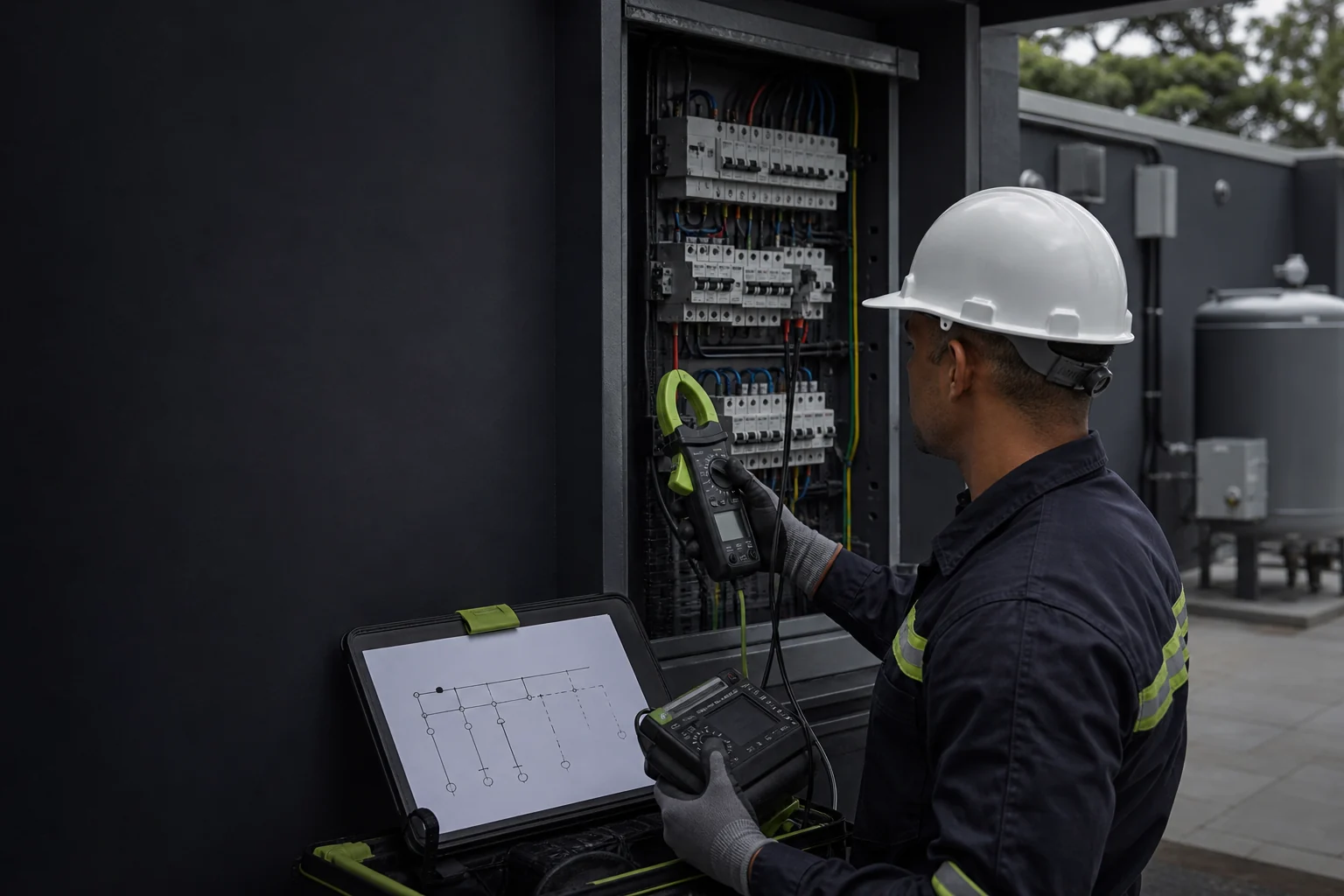
Danger comes before diagnosis or repair.
If there is smoke, fire, unusual heat, arcing, exposed wiring, electric shock or water at electrical equipment, keep clear and use the relevant emergency or electricity-authority channel. Do not touch equipment that may still be energised.
Repair sequence
Authority before corrective work.
Overload, short circuit, earth leakage or ground fault, equipment, wiring, connections, moisture, coordination and a protective-device issue are possibilities, not remote conclusions. The sequence is diagnose, explain findings, obtain authority, correct the confirmed cause, test the affected work and record remaining issues. A larger breaker, bypass or repeated reset is not a generic fix.
Define the trip pattern
Record whether the trip is immediate or delayed, follows a particular load or startup, rain or moisture, time of day, recent additions or leaves supply elsewhere.
Diagnose and authorise
Test the affected circuit, load, protection and installation, explain findings and obtain authority before corrective work.
Repair and verify
Correct the confirmed cause within scope, test the affected work and record remaining issues or further recommendations.
Gauteng service detail
Repair the confirmed cause, not the symptom alone
Recurring tripping is routed from the real operating pattern to diagnosis, explicit authority, corrective work within scope and verification of the affected work.
Capture when it operates
Record whether the trip is immediate or delayed, follows a particular load or startup, rain or moisture, a time of day or recent additions.
Check what supply remains
Note the affected circuit or device and whether supply remains elsewhere so network, shared and private responsibilities stay separate.
Authorise the correction
The confirmed cause and proposed scope are explained before corrective work, then the affected work is tested and remaining issues are recorded.
Safe preparation
Send the pattern without approaching danger.
Record ordinary observations and use safe closed-panel photos only. Do not repeatedly reset protection, do not remove covers, do not perform live tests and do not bypass protection. Keep people clear of heat, smoke, arcing, exposed conductors and water near electrical equipment.
- Exact address and property type
- Immediate or delayed trip
- Particular load or startup
- Rain or moisture pattern
- Time of day and affected circuit
- Recent additions or work
- Whether supply remains elsewhere
- Authorised contact and access
Regional service owners
Choose the page for the exact service market.
Each regional owner adds property, access and responsibility context. West Rand requests remain subject to the exact address, distributor, scope and current service availability.
Tripping repair RoodepoortRecurring trips across mixed property layouts.Tripping repair SandtonManaged access, critical loads and isolation authority.Tripping repair MidrandEstate and business-park repair coordination.Tripping repair RandburgOwner, occupant and shared-property authority.Tripping repair CenturionDistributor, access and backup-system verification.Tripping repair West RandAddress-specific coverage and authority confirmation.
Related owners
Continue with the page that owns the next decision.
Diagnosis, authorised repair, board-specific work, urgent routing, education and cost guidance stay separate.
Questions
Tripping power repair FAQ
Visible answers and structured FAQ data use the same wording.
Why does the power keep tripping in Wesslink service markets?
Overload, short circuit, earth leakage or ground fault, connected equipment, wiring, connections, moisture, protection coordination or a protective-device issue are possibilities. They are not conclusions until the affected installation is assessed and tested.
Should I keep resetting a tripped breaker?
Do not repeatedly reset protection. A larger breaker, bypass or repeated reset is not a generic fix. Keep clear of danger and have the cause identified and cleared before the affected circuit returns to service.
Does tripping always mean the breaker is faulty?
No. The breaker may be operating in response to a downstream condition, or testing may identify another issue. The breaker and affected circuit must be assessed before replacement is proposed.
What do rain-related or load-related trips indicate?
Rain, moisture, a particular load, equipment startup or time-of-day patterns are useful evidence, but they do not establish the cause remotely. Record the pattern without opening or testing electrical equipment.
What may an authorised tripping repair involve?
After diagnosis, authorised work may address the confirmed wiring, connection, equipment, moisture, protection or installation issue within scope. The affected work is then tested and remaining issues are recorded.
Who authorises additional repair work?
The responsible owner, tenant, body corporate, facilities representative or other authorised contact approves corrective work beyond the agreed diagnostic scope. Shared and private responsibilities remain separate.
How is a tripping repair verified?
The affected work is inspected and tested against the confirmed fault and authorised correction. Relevant loads or operating conditions are considered, and unresolved or out-of-scope issues are recorded rather than concealed.
Start with the evidence
Request diagnosis and repair
Send the address, responsible contact, safe symptom or trip pattern, affected circuits, access constraints and any relevant recent work or weather.